Blood sugar management involves more than how sweet a food tastes. Balancing starchy staples with vegetables and protein, replacing sugary drinks with water, gradually increasing fibre-rich foods, and reading labels for actual portions can turn dietary advice into everyday choices that are easier to sustain. People taking glucose-lowering medicines or with special dietary needs require an individual plan.
Does avoiding sweets mean there is no need to think about blood sugar? Starch in foods such as rice and noodles is also digested into glucose, while diabetes involves several factors, including genetics and how insulin works. Looking after blood sugar means considering the composition of a whole meal, its portions, and its drinks. Sweetness alone is not a reliable guide.
This article is mainly for adults who want to improve everyday eating habits and lower their risk of type 2 diabetes. It can also help people with abnormal blood glucose discuss a meal plan with their healthcare team. Dietary changes cannot prevent every type of diabetes, and anyone already diagnosed still needs monitoring and treatment tailored to them.
Look at the whole meal before cutting out staple foods
Starchy staples provide energy. Choosing suitable types and portions is more useful than treating rice or noodles as forbidden. Try replacing some refined rice or flour products with brown rice, oats, or beans, while keeping vegetables and protein foods in the meal. A swap means replacing part of one food with another, rather than adding a bowl of whole grains to an already large serving of rice.
Whole grains and other less refined staples can still raise blood sugar. Milling, cooking methods, food combinations, and the amount eaten all affect the response after a meal; changing grains does not guarantee the same result for everyone. The glycaemic index can help guide choices, but it cannot replace attention to portions, and a low GI alone does not make a food healthy.
Use the plate to spot what a meal is missing
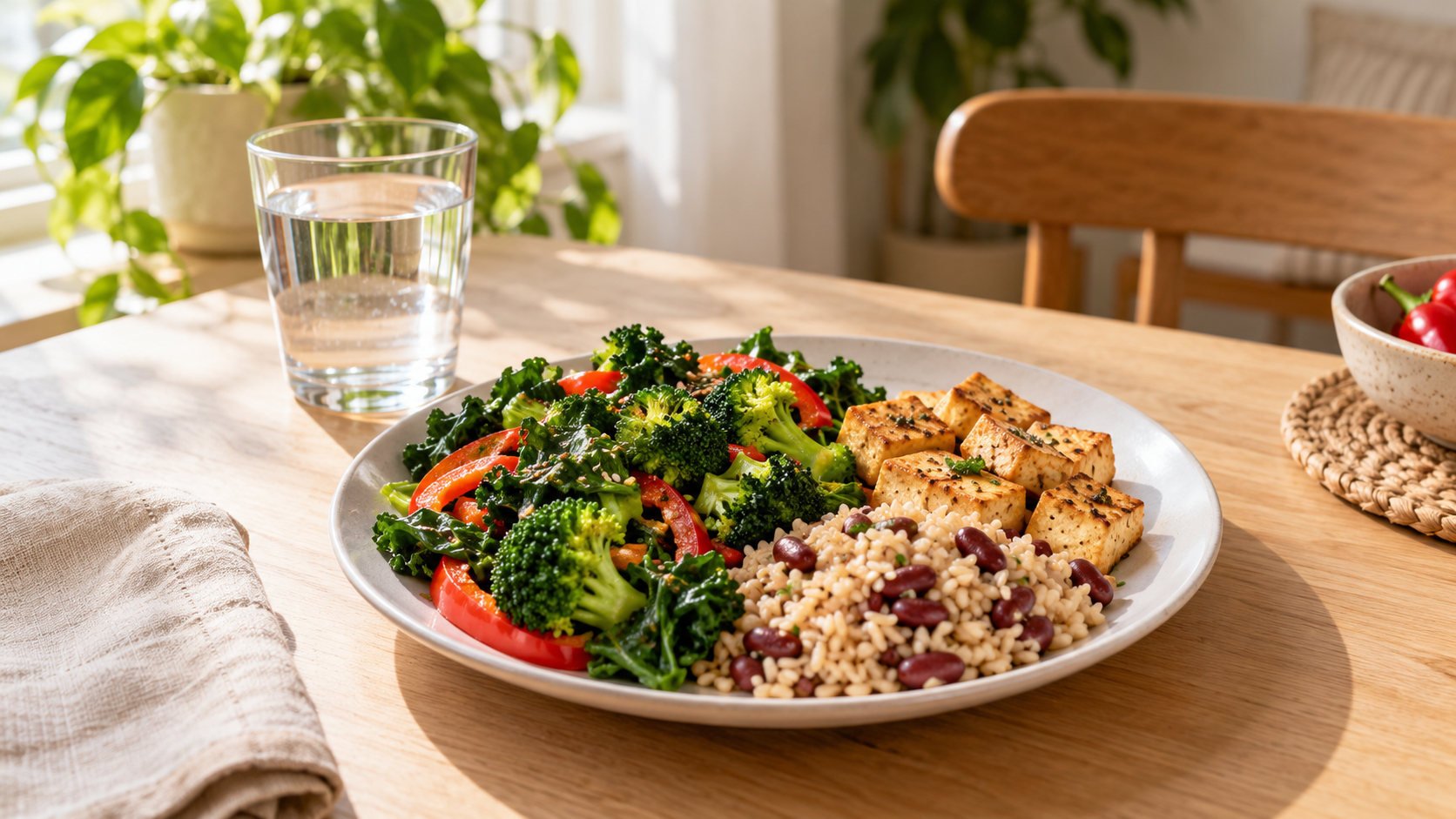
If you would rather not start by calculating nutrients, imagine an ordinary dinner plate in three sections. This can be a starting point for lunch and dinner:
- Fill about half with non-starchy vegetables, such as leafy greens, broccoli, peppers, or mushrooms.
- Use about a quarter for protein foods, rotating between fish, poultry, eggs, tofu, and other options.
- Use about a quarter for rice, noodles, or other carbohydrate-rich foods, including more whole grains where practical.
Potatoes and corn should not simply be counted as part of the half-plate of leafy vegetables. Beans such as red beans and mung beans provide fibre and protein as well as carbohydrate. Fruit and dairy also belong in the day's overall plan. The plate method is a visual guide, not a fixed weight of food for everyone: activity, body size, health conditions, and medicines all affect how much you need.
Start with sugary drinks and choose whole fruit
If milk tea, soda, sweetened coffee, or sweetened milk drinks are regular purchases, try replacing one occasion with plain water or unsweetened sparkling water. If a full switch feels difficult, a smaller cup or fewer purchases can make the change easier to maintain. Avoid compensating for the drink swap by adding an extra snack.
Sugars in honey, syrups, and fruit juice also need to be limited. Freshly squeezed juice, 100% juice, and juice with no added sugar are not substitutes for water. Whole fruit is generally a better choice, providing fibre; fit its portions into your eating plan. Milk and plain unsweetened yoghurt can provide useful nutrients, but they still contain naturally occurring carbohydrate. No added sugar does not mean unlimited amounts.
Build up fibre gradually through everyday foods
Vegetables, whole fruit, whole grains, and beans all provide dietary fibre. Fibre can support fullness and blood sugar management, but it cannot cancel out sugary drinks or oversized servings of starchy foods. Instead of searching for one special food to lower blood sugar, check whether these food groups appear across your meals.
You could start by replacing a little white rice with brown rice, or some of your usual bread with wholegrain bread, and gradually find a texture you enjoy. Check the ingredients for whole grains when buying bread; colour alone is not a reliable guide. Increase fibre gradually. Suddenly eating a lot of beans and whole grains may cause bloating or other digestive discomfort. Build up slowly and maintain suitable fluid intake; follow any existing medical advice to restrict fluids.
Read food labels for the amount you actually eat
When buying cereal, biscuits, bread, or drinks, look at the ingredients and nutrition information as well as the claims on the front. Sugar-free biscuits may still contain starch from flour. For blood sugar, pay attention to total carbohydrate rather than sugar alone. Fibre, energy, fat, and other nutrients also help you compare products.
Check whether the figures are per 100 grams, per 100 millilitres, or per serving, then relate them to the amount you actually eat or drink. One bottle or packet may contain more than one serving. This is a way to understand your choices, not a requirement for everyone to weigh every food each day. People who use insulin and need to count carbohydrates should receive individual guidance.
Turn the principles into four everyday choices
- Breakfast: If you usually have sweet bread and a sugary drink, try wholegrain bread with an egg and unsweetened dairy. Consider the staple, protein, and drink together.
- Canteen meals or takeaways: Rice served with shredded potatoes contains two substantial sources of carbohydrate. Try replacing some potatoes with green vegetables, adding tofu, fish, or poultry, and choosing water.
- Noodle meals: Swap a large bowl containing only noodles for a suitable portion of noodles with vegetables and an egg or tofu. If you remain hungry, check whether the meal has a balanced mix of foods and whether the total amount meets your needs.
- Snacks: When you need a snack, consider a suitable portion of whole fruit, plain unsweetened yoghurt, or unsalted nuts in place of cake or pastries. Choose according to your needs; there is no need to add another round of food just because it is considered healthy.
Begin with one or two situations you encounter often. Keep a water bottle ready, for example, or make vegetables a regular part of your order while adjusting the original portion of starchy food. After a week, consider whether the swaps were manageable and whether you were often hungry, then refine the plan. An occasional slice of cake need not mean abandoning everything else.
Fit dinner into your everyday routine
If work often delays dinner, plan a simple meal with vegetables, a starchy staple, and protein in advance. This gives you an alternative to relying on snacks or an oversized late-night meal at the last minute. Meal timing needs to fit work, activity, and medicines, rather than a universal deadline for the last meal of the day.
Alongside food planning, allow enough time for sleep. If sleep remains poor after changing dinner, stricter food restriction or cutting out carbohydrates is not a solution on its own. Sleep difficulties and blood sugar problems each need appropriate assessment.
Abnormal results or medicines call for an individual plan
People using insulin or certain other glucose-lowering medicines may develop low blood sugar if they suddenly eat less, miss meals, or delay eating. Discuss how meals, monitoring, and medicines should fit together before substantially changing carbohydrate portions or meal times; do not change medicines yourself. Children, people who are pregnant or underweight, and people with kidney disease or other special dietary needs should not simply adopt these adult portions.
Seek medical assessment for marked thirst, frequent urination, unexplained weight loss, or blurred vision. If these symptoms are accompanied by persistent vomiting or difficulty breathing, or if you faint, seek emergency help. Even without symptoms, abnormal glucose or HbA1c results need follow-up as advised. People with risk factors such as a family history or overweight can ask whether screening is appropriate. Having stopped eating sugar does not replace testing.
Health information noticeThis article provides general health education and does not replace professional diagnosis, treatment or personalized advice about medicines. Do not start, stop or change medicines or treatment based solely on this article. Seek medical care for persistent symptoms and urgent help for emergency warning signs. Images are AI-generated illustrations, not real patient photographs, clinical test results or evidence of treatment outcomes.
Copyright and rights concernsIf you believe any text or image in this article infringes your rights, please contact this website at we@worldsleep.com and provide the article link, a description of the concern and supporting rights documentation. We will review the information and respond promptly.