Caring for cardiovascular health at home means getting reliable measurements and knowing how to act on them. Learn how to choose a monitor, measure and record blood pressure, distinguish assessment thresholds from emergency warning signs, and connect lower-salt eating, gradual activity, smoking cessation and sleep habits with professional care.
Managing cardiovascular health at home starts with reliable blood pressure measurements, sustainable daily habits and knowing when observation is no longer enough. Sleep, diet and physical activity all matter, but they cannot replace necessary medicines or guarantee that a heart attack or stroke will never happen. This article is intended mainly for adults in general. Children and people who are pregnant or in the postpartum period need their own assessment plans and should not simply apply the blood pressure thresholds below.
Choose a suitable monitor and agree on a monitoring plan
Home monitoring is particularly useful for people with diagnosed hypertension, those starting or adjusting treatment, and anyone whose clinician recommends further assessment. Prefer a validated automatic upper-arm monitor, with a cuff that fits your arm circumference. A cuff that is too large or too small can distort the result. Bring the monitor to an appointment when you first start using it so a healthcare professional can check your technique and readings. Wrist and finger monitors are generally not the first choice.
A healthcare professional can compare both arms during the initial assessment and advise which arm to use consistently afterward. An irregular heartbeat or repeated measurement-error alerts may require a different measurement method. Ask your clinician about this. People without a reason to monitor do not need to take numerous readings every day for reassurance.
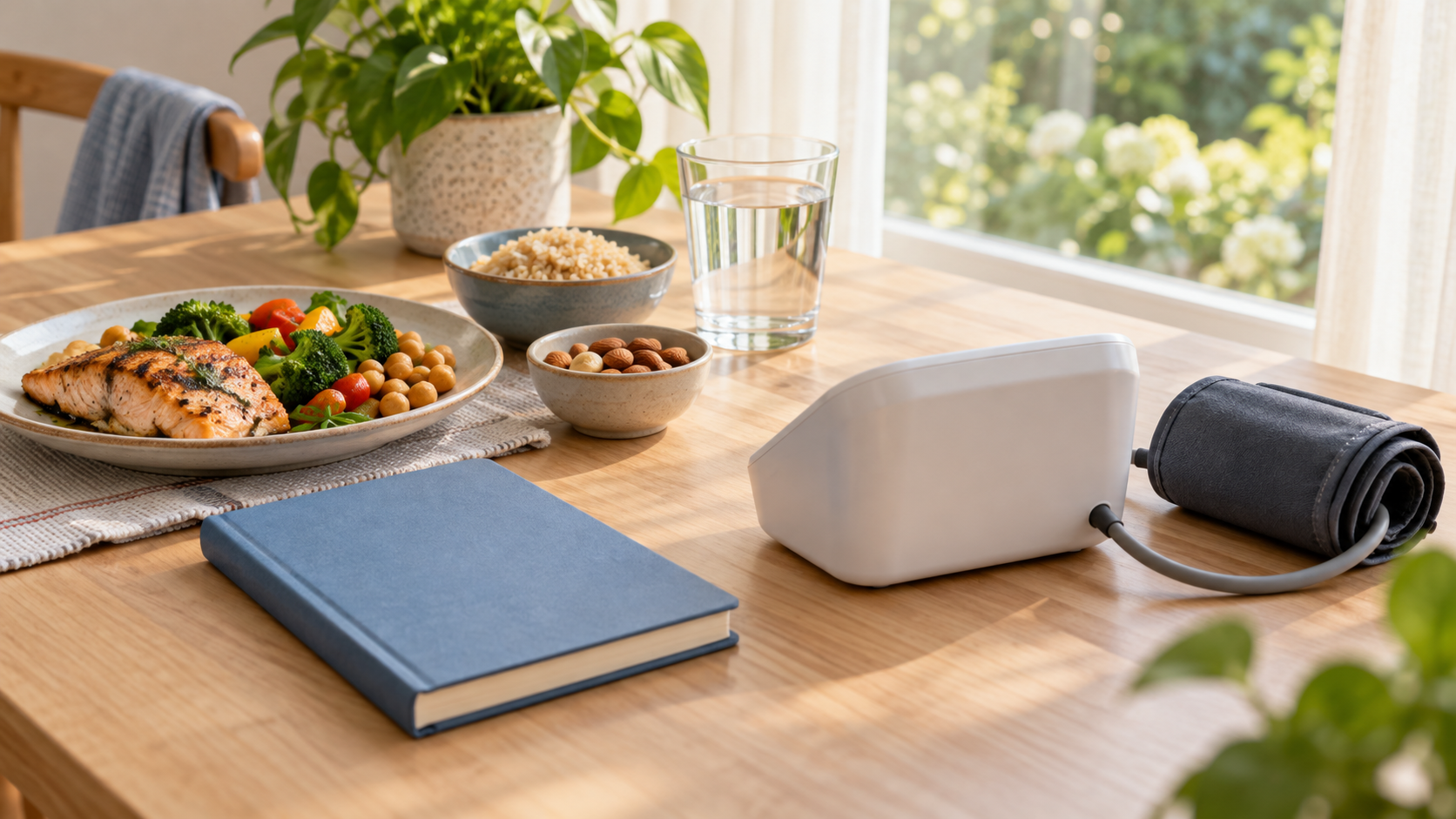
Follow the same steps before and during each measurement
- Prepare ahead.For at least 30 minutes beforehand, do not smoke, drink caffeinated beverages or exercise. Empty your bladder first.
- Sit quietly.Rest for at least 5 minutes, with your back supported, feet flat on the floor and legs uncrossed.
- Position the cuff correctly.Place it on your bare upper arm, not over clothing. Relax and support your arm on a table so the middle of the cuff is approximately level with your heart. Follow the device instructions for positioning and fit.
- Stay still and silent.Do not use your phone or move during measurement. Wait at least 1 minute after the first reading before taking the second.
- Keep both readings.Record the date, time, systolic pressure and diastolic pressure—the upper and lower numbers. Note symptoms and medicine use as well, rather than selecting only the lower readings.
For an initial assessment, a common approach is to take a set of readings at similar times each morning and evening for 7 days, with at least 4 days of recording. Keep the first day's results, but exclude them when calculating the average; average the remaining valid systolic and diastolic readings separately. Follow your clinician's plan if it differs, and do not delay prescribed medicines on your own to take a measurement.
Use averages for assessment and act promptly on very high readings
If your home average over several days reaches or exceeds 135 mmHg systolic or 85 mmHg diastolic, arrange a medical assessment. “Or” means that either number reaching its threshold matters. These are commonly used home blood pressure assessment thresholds, not universal treatment targets. Diagnosis also requires consideration of clinic or ambulatory measurements and your overall risk. Guidelines differ in how they classify blood pressure, and being below these numbers does not mean that cardiovascular risk is absent.
For an ordinary isolated elevation, check the measurement conditions, repeat correctly and retain the results. If you already receive treatment, agree on a personal target and follow-up plan with your clinician. Do not stop medicines because one day's readings are normal or double a dose to chase a number. Bring your records to an appointment if home and clinic results differ substantially, or if you repeatedly feel dizzy or unwell on standing.
If systolic pressure is above 180 mmHg or diastolic pressure is above 120 mmHg: if there are no emergency symptoms, wait quietly for at least 1 minute and measure again. If it remains this high, contact a healthcare professional immediately to arrange assessment; do not wait until you have a full week of readings. If chest pain, breathlessness, limb weakness, vision changes or difficulty speaking are also present, call local emergency services immediately without waiting for another reading. Repeated readings close to this range also warrant prompt medical advice.
Count salt in sauces and focus on the whole diet
Adults in general can aim to keep total salt intake below 5 grams a day, roughly equivalent to keeping sodium below 2 grams. This includes salt in meals, soy sauce, oyster sauce, pickles and processed foods; it is not an allowance for another 5 grams added during cooking. When comparing nutrition labels, first compare equal weights of food and then account for the amount you actually eat. With takeout meals, ask for sauces separately and have less salty broth.
Replace some refined staples with oats or brown rice, alongside vegetables, fruit, beans, moderate portions of nuts and fish. Tubers and pulses can add variety to staple foods, but they are not all whole grains. With cooking oils, focus on moderate quantities and replacing some saturated fat with unsaturated fat. There is no requirement to rotate oils to protect your heart. Limit processed meats and salty snacks, and do not rely on a particular food or supplement to treat cardiovascular disease.
If you have kidney disease, high blood potassium or take medicines that affect potassium levels, consult a healthcare professional before switching to a potassium-containing lower-sodium salt. “Lower sodium” does not mean suitable for everyone. People with heart failure, kidney disease or similar conditions should follow their individual dietary and fluid advice.
Build activity gradually, alongside smoking cessation and prescribed care
Adults whose health allows can gradually work toward 150–300 minutes of moderate-intensity aerobic activity each week, together with suitable muscle-strengthening activities on at least 2 days a week. Start with shorter walks if necessary and get up to move during work or television breaks; short periods of activity count too. There is no need to begin with strenuous stair climbing, and the amount you sweat does not establish whether exercise is safe.
If you have coronary artery disease, heart failure, recent chest pain or unusual breathlessness on exertion, agree on an activity plan with your clinician first. Stop exercising if you develop chest pain, marked dizziness or breathlessness, and seek help according to your symptoms. If you smoke, aim to quit and seek cessation support if needed. Do not use alcohol as a way to protect your heart or help you sleep. Taking prescribed medicines and attending follow-up appointments are also part of care at home.
Make sleep part of everyday management
Most adults need about 7–9 hours of sleep a night, although individual needs vary. Persistently insufficient or poor-quality sleep is associated with higher cardiovascular risk. A single bad night does not establish that your heart has been damaged, and sleeping longer does not guarantee lower blood pressure. Consistent bedtimes and wake times, daytime activity, and less bright light, stimulating content and alcohol before bed are more practical than pursuing a supposedly heart-protective bedtime.
Tell your clinician if you frequently snore loudly, have witnessed breathing pauses or wake gasping, or feel very sleepy during the day. Assessment for sleep apnea may be appropriate. Persistent insomnia, anxiety or low mood that affects daily life also deserves attention. Reading, relaxed breathing or talking with family and friends may help ease tension, but these are not substitutes for blood pressure treatment.
Do not wait for blood pressure to confirm an emergency
Call local emergency services immediately for new chest pressure, squeezing or pain that lasts several minutes or keeps returning, especially with breathlessness, cold sweats or nausea, or discomfort extending to one or both arms, the back, neck or jaw. Sudden facial drooping, arm weakness, unclear speech, or sudden changes in vision or balance also require immediate help. Even symptoms that disappear quickly must not be ignored.
These signs do not all have to occur together, and blood pressure does not have to be high. Do not delay care to measure your blood pressure, sleep it off or see whether symptoms settle. Use emergency medical transport where possible. At routine appointments, bring your medicine list, blood pressure record and recent test results so you can discuss blood pressure, cholesterol, blood glucose and daily habits together. This connects care at home with professional medical support.
Health information noticeThis article provides general health education and does not replace professional diagnosis, treatment or personalized advice about medicines. Do not start, stop or change medicines or treatment based solely on this article. Seek medical care for persistent symptoms and urgent help for emergency warning signs. Images are AI-generated illustrations, not real patient photographs, clinical test results or evidence of treatment outcomes.
Copyright and rights concernsIf you believe any text or image in this article infringes your rights, please contact this website at we@worldsleep.com and provide the article link, a description of the concern and supporting rights documentation. We will review the information and respond promptly.