Bedtime habits do not need to become a long list of prohibitions. For most adults, practical steps include reducing light and noise, adjusting clothing, bedding and meal timing, and building a manageable wind-down routine. Learn how to respond to specific discomforts and recognize symptoms that need professional assessment.
Scrolling on your phone before bed, sleeping in underwear, or waking in a different position does not by itself mean something is wrong with your health. A more useful check is to identify what keeps you awake, what leaves you too warm, restricted, uncomfortable, or troubled by reflux, and what a small change could improve. These suggestions are mainly for adults adjusting their everyday bedtime routine and environment. Existing medical conditions and specific care needs require an individual approach.
Start with a quiet, dim and comfortable room
Before buying new sleep products, look around from your usual position in bed. Does a streetlight shine into your eyes? Do devices keep making sounds? Is your bedding too heavy? Identifying an actual disturbance is usually more useful than copying someone else's bedroom.
- Light: Gradually dim the lights before bed and use curtains to block intrusive outdoor light while sleeping. An eye mask is another option if it feels comfortable. If you need to get up during the night, low-level lighting can help you move safely; complete darkness is not essential.
- Sound: Turn off unnecessary alerts and sounds, and agree on quiet times with the people you live with. Eye masks and earplugs are optional. Do not persist with them if they are uncomfortable, and make sure you can still receive essential alarms or calls from someone who needs your care.
- Temperature: Aim to feel neither overheated nor cold. Adjust bedding, sleepwear and room temperature to the season and your own comfort. No single temperature suits everyone. If you keep waking too hot, try reducing excessive bedding first.
If you share a room or have limited control over your surroundings, begin with one manageable detail. The aim is to reduce disruption; an expensive bedroom makeover is unnecessary.
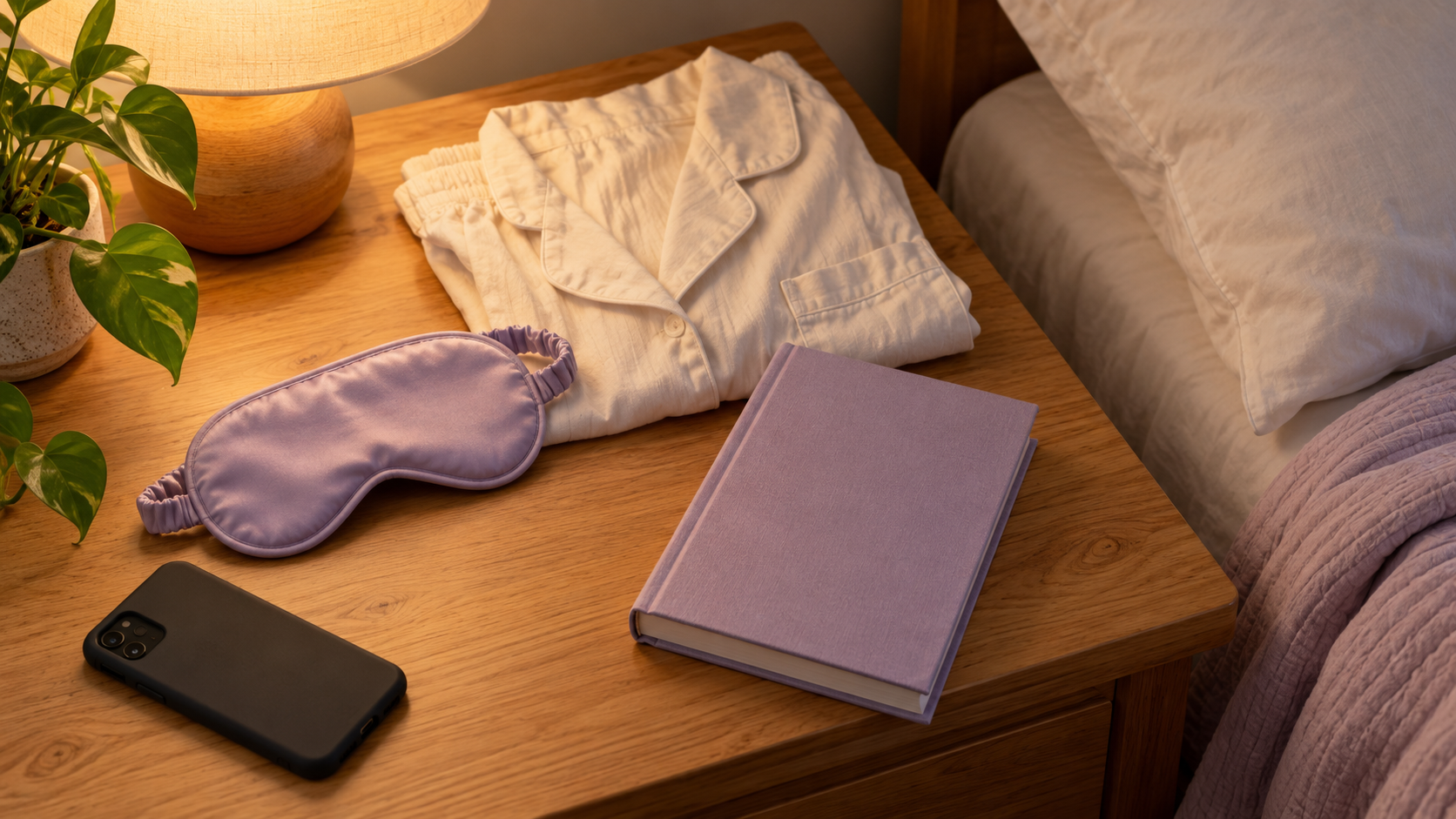
Give phone use and work a stopping point
Light from electronic devices can affect how alert you feel before bed, while continued scrolling can take time away from sleep. Starting your evening wash routine can serve as a cue to finish up: deal with essential messages, then pause work, short videos and content that stirs up strong emotions. Put your phone somewhere you cannot pick it up without thinking.
If you need calls from family or messages while on call, keep those essential alerts and reduce the others. When you do need a screen, lower its brightness and decide beforehand when you will stop. Even with night mode enabled, notice whether you keep using it later than intended. Aim for a boundary you can maintain, without worrying that a quick glance at your phone has ruined the whole night.
Choose clothing and cleansing for skin comfort
Whether to sleep in ordinary underwear can be a matter of personal comfort. Check the details: are straps, waistbands or sock cuffs digging in, is fabric rubbing your skin, or are you sweating because you are too warm? Choose soft, well-fitting clothing that does not feel restrictive. Wearing or removing a particular garment is not a test of healthy behavior. If you have been prescribed a therapeutic garment or device, follow the instructions for using it.
Remove makeup before bed and cleanse gently, avoiding repeated rubbing or scrubbing. Some cosmetics can clog pores or worsen acne, so take your own skin's response into account when choosing products. Makeup removal is skin care and should not be presented as a treatment for insomnia. Nor does occasionally forgetting to remove it establish that serious damage has occurred. Persistent redness, itching, rashes or acne deserve a separate assessment.
Adjust evening meals and drinks to your response
A large meal just before lying down can leave some people uncomfortable with fullness or reflux. If you are genuinely hungry, a small amount of food you usually tolerate may be reasonable. You do not need to endure hunger or turn a snack into a full meal. If you follow a prescribed eating schedule, prioritize your treatment or nutrition plan.
If you have gastroesophageal reflux symptoms at night or when lying down, waiting at least three hours after a meal before lying down may help. This advice is for people with those symptoms, rather than a universal rule against eating before bed. Food triggers differ between people. Notice which foods are followed by heartburn or acid coming back up, then discuss this with your clinician. There is no need to eliminate all fatty, spicy or sweet foods at once.
Review tea, coffee and other caffeinated drinks, particularly those consumed in the afternoon or evening. If their use repeatedly coincides with difficulty falling asleep, try stopping earlier and observe what changes. Do not use alcohol to make yourself sleepy, or treat a particular food or drink as a remedy for a sleep problem.
Look for natural support from your pillow and position
Most adults do not need to force themselves to face the same way all night. Check your usual sleeping position: is your head and neck supported, is your head noticeably tilted to one side, or does the pillow push your chin toward your chest? When lying on your side, aim for comfortable alignment of your head, neck and trunk. The right pillow depends on your position and how your mattress feels; there is no height that suits everyone.
If sleeping on your front or resting your head on an arm repeatedly leaves you uncomfortable, try reducing neck twisting and pressure on the arm, then notice how you feel on waking. These adjustments address discomfort and cannot establish whether your spine or nerves are healthy. Seek assessment if neck pain lasts for several weeks, or if you have symptoms such as pins and needles or a cold arm. Repeatedly changing pillows is not a substitute for an examination.
Build a simple sequence you can maintain
You do not need to complete a long list of bedtime tasks. Choose one or two of the things that bother you most and work them into a manageable sequence. For example:
- Finish essential work and preparations for the next day earlier. Write down unresolved tasks so you can return to them at a suitable time.
- After washing, change into comfortable clothes, dim the lights, and choose an activity that helps you unwind, such as reading or listening to gentle music.
- Go to bed when sleepy, keep your wake-up time as consistent as possible, and allow enough time for sleep.
- The next day, briefly note which discomforts improved, whether falling asleep was still difficult, and how alert you felt during the day. Use this to guide your next adjustment.
The purpose of a record is to notice recurring patterns, not to grade each night. One poor night does not prove a habit is harmful, and one good night does not prove a product works. You can change a relaxation activity that does not suit you. Having unresolved worries does not mean you must achieve a perfectly calm state before you can rest.
Know when to seek further assessment
Seek professional help if difficulty falling asleep, repeated awakenings or early waking persist despite changes to your habits, or if sleep problems affect your daytime work, mood or daily life. A clinician can assess possible causes and whether treatment such as cognitive behavioral therapy for insomnia is appropriate. Lifestyle adjustments cannot replace assessment and treatment for every sleep problem.
Loud snoring with witnessed breathing pauses, choking or gasping awakenings, or marked daytime sleepiness also warrants assessment for sleep apnea. A comfortable bed does not rule it out. Do not drive when sleepy. When discomfort or symptoms persist, finding the cause is more useful than continually adding bedtime rules.
Health information noticeThis article provides general health education and does not replace professional diagnosis, treatment or personalized advice about medicines. Do not start, stop or change medicines or treatment based solely on this article. Seek medical care for persistent symptoms and urgent help for emergency warning signs. Images are AI-generated illustrations, not real patient photographs, clinical test results or evidence of treatment outcomes.
Copyright and rights concernsIf you believe any text or image in this article infringes your rights, please contact this website at we@worldsleep.com and provide the article link, a description of the concern and supporting rights documentation. We will review the information and respond promptly.