Hair loss, back pain, foamy urine and nighttime urination cannot diagnose kidney disease on their own. Learn what eGFR, uACR and urinalysis reveal, why repeat testing matters and when to seek care.
Hair shedding, an aching lower back and waking up tired are sometimes blamed on “weak kidneys.” These concerns deserve attention, but they do not measure how well the kidneys filter blood. Equally, thick hair, a strong back and an absence of swelling cannot rule out early chronic kidney disease. Reduced kidney function or increased urine albumin can develop before there are noticeable symptoms.
For adults concerned about kidney health, a useful approach is to separate symptoms from diagnosis, understand personal risk, and consider blood tests, urine tests and previous results together. Here is what the common tests can tell you, and which changes call for medical attention.
Hair loss and back pain need their own assessment
Hair loss can be related to inherited traits, stress, a recent illness, weight changes or iron deficiency. Shedding alone cannot diagnose kidney disease or indicate its severity. If hair loss persists or significantly affects your life, seek an assessment of its cause instead of buying “kidney support” products or taking iron without checking whether it is needed.
Back pain commonly occurs with problems such as muscle strain. Spinal, nerve or urinary tract conditions can also cause it. How much you can lift or how long you can bend over is not a kidney function test. Tell a clinician where and when the pain occurs and whether you also have fever, pain when urinating or blood in the urine, rather than describing it only as a “weak back.” Fatigue and poor sleep also cannot, on their own, identify a kidney problem. Persistent symptoms should be assessed on their own merits.
Changes in urine and swelling are clues, not a diagnosis
Foamy urine cannot be assessed reliably by appearance alone. A fast urine stream, dehydration or exercise can cause foam; increased urine protein is another possibility. There is no sufficiently reliable home rule based on the amount of foam or how long it takes to disappear. If it occurs frequently and becomes more noticeable, arrange a urine test. An absence of foam does not replace screening.
Possible blood in the urine needs prompt assessment. Pink, red or dark brown urine may reflect urinary tract bleeding, although food, medicines or contamination with menstrual blood can also change its appearance. Do not rule out bleeding yourself: contact a healthcare professional promptly even if the amount is small, it is painless, or you are unsure whether it is blood. Urine becoming paler after drinking more water does not establish that all is well.
Recurring swelling also needs an explanation. Puffy eyelids or swollen ankles and legs are not specific to kidney disease; heart and circulation problems can produce similar changes. Recording when swelling occurs, whether it is worsening and what other symptoms accompany it is more useful than simply blaming late nights. Swelling with a marked reduction in urine output or difficulty breathing makes medical assessment more urgent.
Check both the blood and urine parts of your results
Assessing the risk of chronic kidney disease usually involves looking at both filtration and urine albumin. These answer different questions, so one cannot substitute for the other.
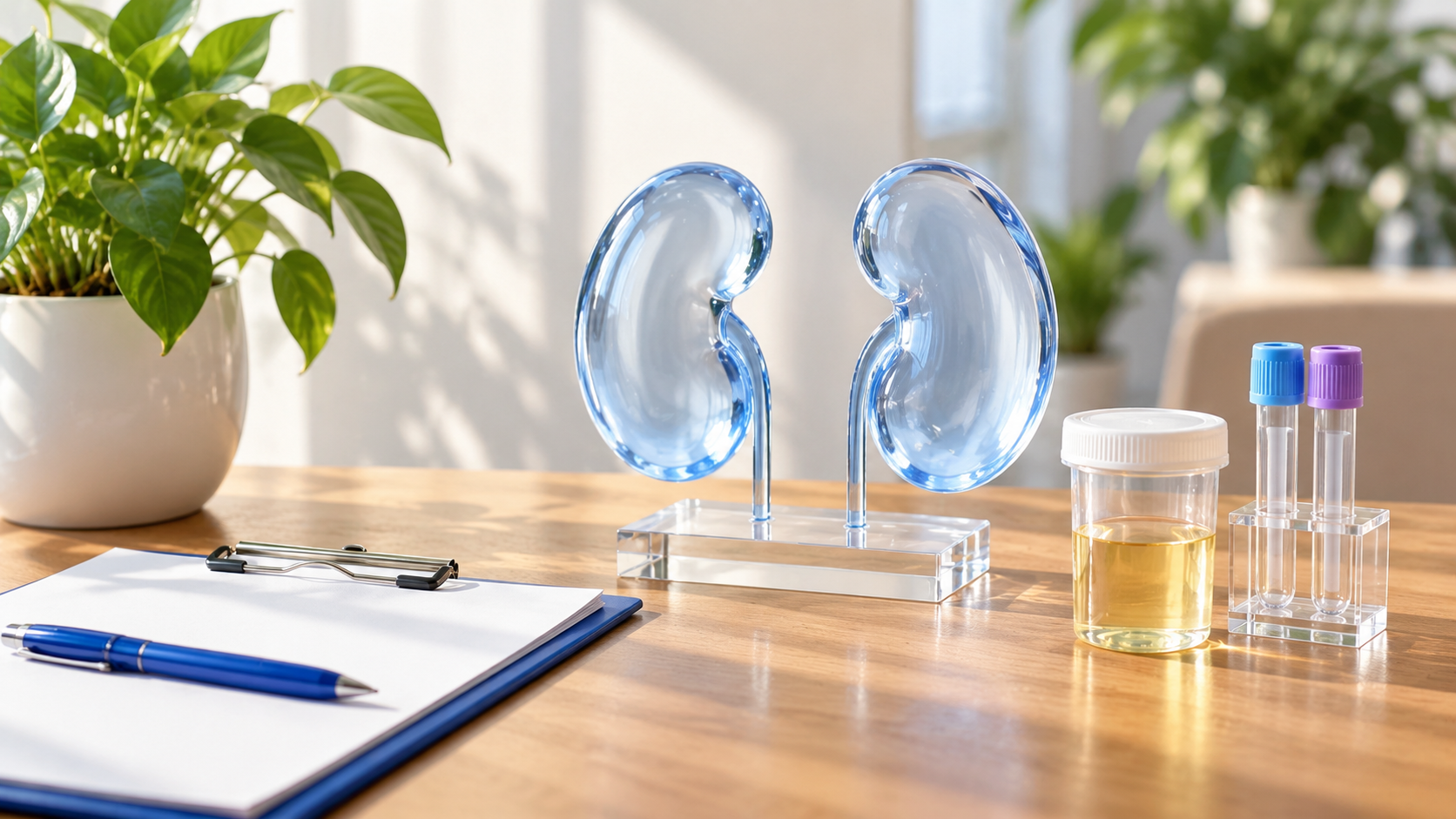
- Serum creatinine and estimated glomerular filtration rate (eGFR): Creatinine is a blood marker used to estimate filtration. eGFR is calculated using creatinine and information such as age. It is an estimate, not a percentage of kidney function remaining. Do not rely solely on whether creatinine is flagged as abnormal: muscle mass, diet and certain medicines can affect interpretation.
- Urine albumin-to-creatinine ratio (uACR): This compares albumin with creatinine in the same urine sample to help assess whether albumin loss is increased, while reducing the effect of differences in urine concentration. Albuminuria can require attention even before eGFR falls. A normal uACR also does not exclude every type of kidney disease.
- Urinalysis and, when needed, urine microscopy: These can provide clues such as protein or red blood cells. Standard urine dipsticks have limited sensitivity for small increases in albumin, so a “negative protein” result does not necessarily mean that uACR has been assessed. If you are at risk, ask whether quantitative testing is also appropriate.
- Blood pressure and ultrasound when indicated: Blood pressure contributes to the overall assessment. Ultrasound mainly examines structure and problems such as obstruction. A normal-looking scan does not establish that filtration and urine albumin are normal, and it cannot replace blood and urine tests.
Creatinine-based estimates may be less accurate in people with unusually low or high muscle mass, for example. Depending on the clinical question and available testing, a clinician may add cystatin C to refine the eGFR estimate. This does not mean that everyone needs to arrange every test themselves.
An abnormal result needs review; three months is not a waiting period
An abnormal result does not automatically mean chronic kidney disease. Diagnosis usually requires evidence that an abnormality of kidney structure or function has been present for at least three months. Previous tests, medical history, imaging and repeat measurements can help establish this. A single low eGFR or raised uACR may reflect analytical or biological variation, but it may also indicate an acute problem and should not be dismissed.
“At least three months” helps establish chronicity; it is not advice to delay care for three months. The timing of repeat tests depends on the degree of abnormality and the clinical circumstances. A sudden change, substantially reduced urine output or feeling generally unwell may need immediate attention. Bring past reports in date order rather than focusing only on the latest number.
For repeat urine albumin testing, clinicians often recommend a midstream sample from the first urination of the morning. Recent vigorous exercise, menstruation or a symptomatic urinary infection can affect results. Mention these factors and follow the collection instructions. Do not delay seeking care for blood in the urine or fever while waiting for an “ideal sample.” There is also no need to force yourself to drink large volumes before testing or stop prescribed medicines on your own.
If you keep getting up to urinate, record your sleep too
More nighttime urination does not necessarily mean declining kidney function. Large drinks before bed, caffeine or alcohol, some medicines, bladder or prostate problems, and blood glucose or heart problems can all contribute. Sometimes the need to urinate wakes you; sometimes a sleep problem wakes you first and you then use the bathroom. Both patterns are worth explaining to a clinician.
For a few days, record when and roughly how much you drink, when you wake and urinate at night, approximate urine volumes, any urgency or pain, and when you take medicines. Start by adjusting large drinks close to bedtime and evening caffeine while maintaining suitable daytime fluid intake. Do not restrict fluids throughout the day simply to avoid getting up at night. Follow any existing prescribed fluid restriction, and let your clinician adjust the dose or timing of diuretics. Arrange an assessment if nighttime urination keeps disrupting your sleep.
Plan testing around risk and seek help according to symptoms
Diabetes, high blood pressure, cardiovascular disease, a previous acute kidney injury, or a family history of kidney failure or inherited kidney disease are reasons to discuss a testing plan proactively. Whether to test and when to repeat testing depend on your history and previous results. Feeling well is not a reason for someone at high risk to skip testing, but a single episode of hair shedding is not a reason to keep buying screening packages either.
Seek medical help the same day if urine output suddenly becomes much lower than usual, especially with vomiting, diarrhoea or dehydration. Fever with flank pain or painful urination, or sudden severe back pain, also needs prompt assessment. Seek emergency care for significant breathing difficulty, confusion, or almost no urine accompanied by feeling very unwell. Blood in the urine needs prompt evaluation even when it is painless.
Bring previous test results, a list of medicines and supplements, and any symptom or nighttime urination records to your appointment. Useful questions include: “Do I need both eGFR and uACR? What could affect the results? When should I repeat the tests, and which changes mean I should return sooner?” Focusing on verifiable results and an agreed follow-up plan provides a more reliable basis for understanding kidney health.
Health information noticeThis article provides general health education and does not replace professional diagnosis, treatment or personalized advice about medicines. Do not start, stop or change medicines or treatment based solely on this article. Seek medical care for persistent symptoms and urgent help for emergency warning signs. Images are AI-generated illustrations, not real patient photographs, clinical test results or evidence of treatment outcomes.
Copyright and rights concernsIf you believe any text or image in this article infringes your rights, please contact this website at we@worldsleep.com and provide the article link, a description of the concern and supporting rights documentation. We will review the information and respond promptly.