Small edible red beans can add variety to staple foods, but their names, color and iron content do not establish treatment benefits. Learn how to identify food-grade beans, soak and cook them, build balanced meals and adapt them to individual needs, while separating nutrition from claims about dampness, anemia and sleep.
Claims that small red beans can “remove dampness” or “nourish the blood” often attract more attention than choosing and cooking them. For adults who want more variety in their staple foods, these beans can be an everyday pulse. Their color, traditional names and nutrients do not establish that they treat edema, anemia or insomnia. Choosing a food-grade product, cooking it thoroughly and including it in a complete meal are more useful than seeking special benefits from a bowl of “health soup.”
Start with identity: “red bean” can mean different plants
Both chidou and chixiaodou may be called hongdou, or “red bean,” in Chinese. Edible beans commonly used for red bean paste and products sold as chixiaodou may belong to different kinds, with different shapes and cooked textures. Seed length and fullness can offer clues, but neither reliably identifies a product by itself. They certainly do not establish that slender beans remove dampness while round ones treat anemia. Herbal names, retail names and botanical identities do not always correspond directly. The familiar English name “adzuki” should therefore not be assumed to identify every product sold under these Chinese names.
Buy beans clearly intended for eating, with a clear product name, producer information and cooking instructions. Ask the seller if their identity is uncertain. This article concerns edible pulses sold through reputable food suppliers. Other red-colored beans, including red kidney beans, can require different preparation; color alone does not make them interchangeable. Ornamental seeds such as rosary peas are not edible red beans, and some are poisonous. Do not collect unfamiliar “red beans” or cook seeds taken from jewelry.
The value is in the whole beans and the whole meal
These pulses provide starch, plant protein, dietary fiber and nutrients including iron. Replacing some refined rice or flour foods with cooked pulses is one way to diversify meals. However, nutrient content differs between varieties, dry and cooked beans, thin broth and bean rice. Figures for dry beans cannot simply be applied to a bowl of soup.
For an everyday meal, reduce some of the rice and add a small amount of cooked beans, adjusting to appetite and digestive tolerance. There is no need for a fixed “health-promoting ratio.” Include vegetables and plan protein sources such as fish, eggs or tofu as part of the meal. The beans themselves contribute to the meal; they do not have to be an extra serving added after an unchanged full meal.
If you drink only the broth and discard the beans and other ingredients, you miss much of the protein and fiber remaining in the solids. Evaluate sweet bean paste, candied beans, pastries and milk tea by their entire recipe. Added sugar, syrup or fat means that “contains red beans” is not enough to make something an everyday staple food. Bean rice or porridge prepared without extra sugar makes the ingredients easier to control.
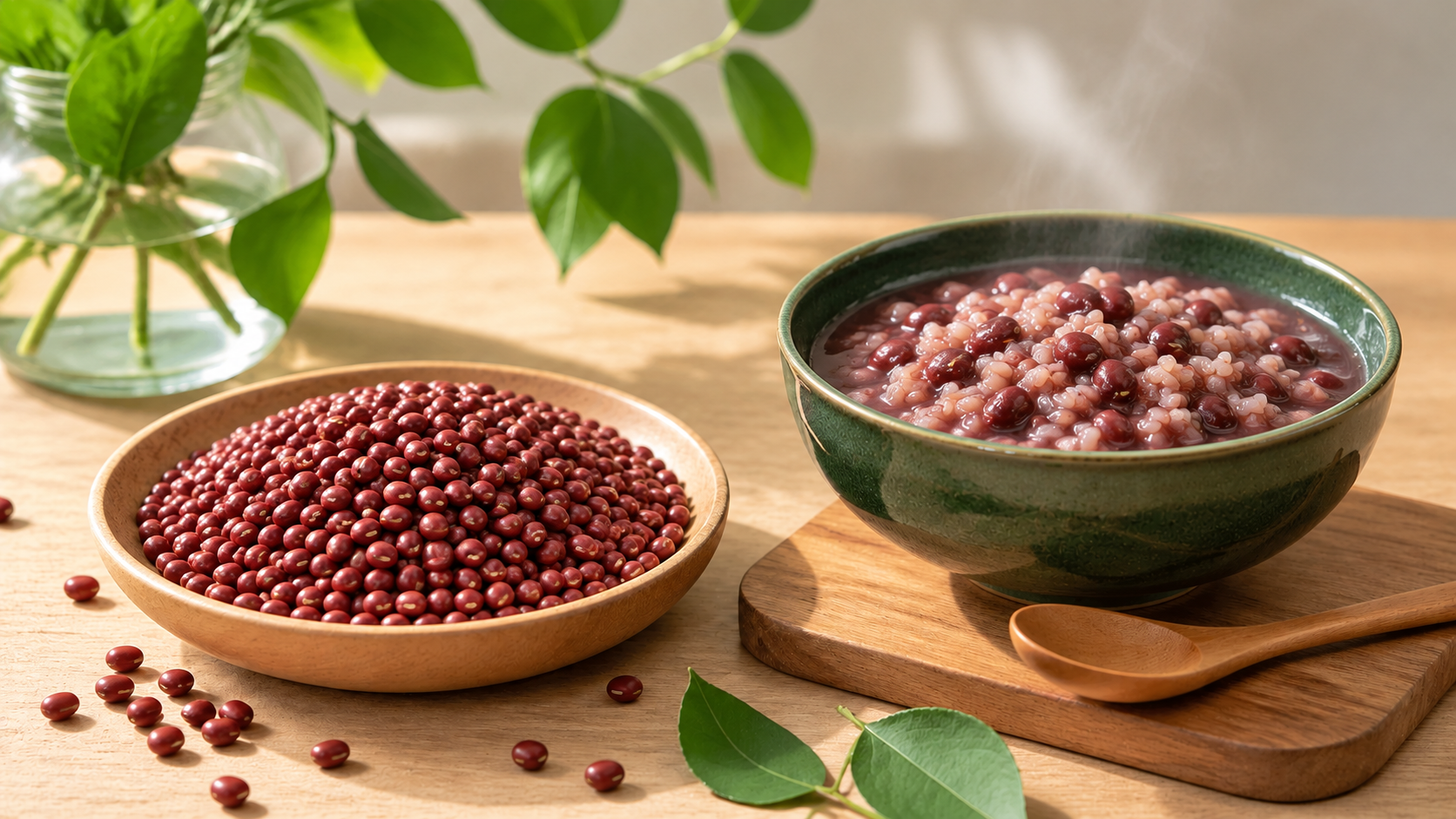
Sort, soak when needed and cook for the particular bean and appliance
Successful cooking depends on the variety, how long the beans have been stored and the equipment used. The following sequence is practical, but follow any specific instructions on the product and appliance.
- Sort and rinse.Remove small stones, debris and unusually damaged beans. Store dry beans in a sealed container in a cool, dry place. Do not try to rescue moldy or off-smelling beans by cooking them longer.
- Soak as appropriate.Presoaking can shorten cooking time; refrigerating beans during a long soak is a prudent choice. Drain the soaking water, rinse and cook in fresh water. Soaking is a preparation step, not a substitute for heat, and it does not “draw dampness out.”
- Heat thoroughly.On the stovetop, bring the water to a boil, then continue cooking until the beans are tender throughout, without a hard center. Do not eat them raw or merely softened by soaking. With a pressure cooker, follow the instructions for the bean and appliance, including the fill limit for beans. Red kidney beans require particular care because of lectins: low-temperature slow cooking alone is unsuitable for preparing dry red kidney beans.
- Allow for different cooking times.If the beans take longer than rice, cook them first, then incorporate them into a suitable rice or porridge recipe. This avoids cooked rice with still-hard beans. Portion and refrigerate promptly after cooking; freeze individual portions for longer storage rather than keeping a pot at room temperature for repeated servings.
There is no single soaking duration or cooking time in this article for every product called “red bean.” In particular, a minimum heat-treatment instruction for kidney beans is not a guarantee that every kind of bean will be fully cooked as soon as that time has elapsed.
Containing iron does not make beans an anemia treatment
Iron in beans is nonheme iron, which is generally absorbed less readily than heme iron. A red seed coat does not establish a “blood-nourishing” effect, and a redder broth does not mean it contains more iron. Moving from “contains iron” to “will improve anemia, complexion or sleep” goes beyond what the nutrient content can demonstrate.
Pair iron-containing foods with vitamin C-rich foods such as sweet peppers, broccoli or citrus fruit to help absorb plant-source iron. People who eat animal foods can also include moderate amounts of lean meat, fish or shellfish. Vegetarians should consider varied sources, including pulses and fortified foods, rather than relying on one red bean. These are food-pairing suggestions, not a reason to start vitamin C or iron supplements on your own.
Persistent marked fatigue, pallor, heavy menstrual bleeding or a history of iron deficiency warrants medical assessment. A clinician can decide whether a complete blood count or tests of iron status are appropriate. Not all anemia is caused by iron deficiency. Once diagnosed, its cause and treatment need attention; bean soup cannot replace prescribed iron or other treatment.
“Removing dampness” cannot replace assessment of swelling or sleepiness
The traditional concept of “dampness” is not interchangeable with edema, obesity or an abnormal laboratory result in modern medicine. Records of traditional use do not automatically establish equivalent clinical benefits from everyday bean meals or soup. Increased urination, sweating or a temporary change in weight alone does not establish that a disease has improved.
Sleepiness, a heavy feeling in the body and swollen legs are also different problems. Swelling can relate to prolonged sitting or standing, medicines, venous circulation or conditions affecting the heart or kidneys; management depends on the cause. Persistent or worsening swelling needs assessment. New swelling in one leg, redness or warmth calls for prompt evaluation. With shortness of breath or chest pain, seek emergency help immediately rather than first trying to “drain fluid” with soup.
Adapt the meal when you have particular dietary needs
If you rarely eat pulses or are prone to gas, start with a small amount of well-cooked beans and observe your tolerance. Discarding soaking water may reduce gas for some people, but it is not a guarantee. Reduce or stop the food if abdominal pain or diarrhea recurs, and seek care as symptoms require. There is no need to force yourself to keep eating it for supposed health benefits.
People managing blood glucose should count the carbohydrate from beans, rice and desserts within their existing meal plan. Chronic kidney disease does not automatically require avoiding all beans. Discuss potassium, phosphorus, protein and fluid adjustments with a clinician or dietitian, taking account of laboratory results, disease stage and dialysis. Making beans into soup does not automatically remove their potassium.
For sleep, focus on eating habits and symptoms
The nutrients in these beans do not demonstrate a direct sleep-inducing effect. A bedtime bowl of bean soup should not be treated as insomnia therapy. If beans at dinner cause bloating, try a smaller amount or an earlier meal. Avoid large, heavy meals close to bedtime; there is no need to add a large bowl for “health.” A regular sleep schedule and enough time reserved for sleep are consistent with sleep-health guidance.
Seek professional assessment if sleep problems persist and affect daytime functioning. Small red beans fit best as one of the ingredients rotated through ordinary meals: clearly identified as food, thoroughly cooked, simply prepared and suited to the rest of your diet and your own tolerance.
Health information noticeThis article provides general health education and does not replace professional diagnosis, treatment or personalized advice about medicines. Do not start, stop or change medicines or treatment based solely on this article. Seek medical care for persistent symptoms and urgent help for emergency warning signs. Images are AI-generated illustrations, not real patient photographs, clinical test results or evidence of treatment outcomes.
Copyright and rights concernsIf you believe any text or image in this article infringes your rights, please contact this website at we@worldsleep.com and provide the article link, a description of the concern and supporting rights documentation. We will review the information and respond promptly.