Apple and jujube soup can be an ordinary homemade dish. Fresh and dried jujubes differ in water content and nutrient concentration, and no added sugar does not mean sugar-free. Knowing the ingredient amounts, eating an appropriate portion of the fruit pieces, and fitting the dish into your daily diet are more useful than following a fixed recipe for health benefits. This article also explains considerations for blood glucose management and bedtime drinking.
Cooking apples with jujubes, also called Chinese red dates, makes a simple, fragrant fruit soup. Adults who have no special dietary restrictions and can chew and swallow normally can include it in their usual diet if they enjoy it. What matters is the type of jujube, the amount of fruit, whether sugar is added, and whether the fruit pieces are eaten. Enjoying a warm texture is a personal preference; it does not establish that the dish treats anemia or insomnia.
Fresh and dried jujubes are different by weight
Fresh jujubes, such as winter jujubes, contain more water and are usually crisp. The dried red jujubes commonly used in soup have lost water and developed wrinkled skins. At the same weight, dried jujubes generally contain more concentrated carbohydrate and energy. A handful of dried jujubes should therefore not be treated as the same weight of fresh fruit. Drying does not necessarily involve adding sugar: plain dried jujubes can be very sweet on their own.
Fresh jujubes can supply vitamin C, but their nutrient values cannot simply be applied to dried fruit or a bowl of cooked soup. Cultivar, ripeness, processing, and storage all affect composition. When buying packaged products, distinguish plain dried jujubes from candied or sugar-preserved versions. Similar names do not mean identical ingredients or sugar content.
Counting individual fruits is also an unreliable portion guide. Large and small jujubes, and products sold with or without pits, have different edible weights. The first time you make the dish, a kitchen scale can help you learn how much edible fruit you actually use. That is more useful than mechanically following a fixed number of jujubes every day.
No added sugar still calls for attention to portions
Apples and jujubes contain naturally occurring sugars and other carbohydrate. Leaving out rock sugar, honey, or syrup reduces added sugar, but does not make the dish sugar-free. Naturally occurring sugar within fruit flesh should not simply be equated with added sugar, either. Whole fruit also supplies fiber and other nutrients, so concern about sugar is not a reason to avoid all fruit.
Dried jujubes are small enough that it is easy to add more than intended. Set aside the planned amount and put the package away before cooking. This makes portions easier to manage than repeatedly adding more fruit to the pot. If fruit or dessert is already planned for the day, include the soup in that plan. It can replace a planned sweet food or fruit serving instead of adding a large bowl on top of the usual diet.
A “no added sugar” claim does not mean a product has no carbohydrate. To estimate intake, consider the carbohydrate on the nutrition label, the stated serving weight, and how much you actually use. Marketing claims and how sweet the food tastes are not enough.
Drinking the cooking water is not the same as eating the fruit
During cooking, some sugar and soluble components pass into the water, while much of the fiber remains in the skin and flesh. Straining out the fruit means missing those solids. You cannot count all the fruit used in the pot as fruit you have eaten if you only drink the liquid. A darker color, stronger aroma, or sweeter taste is not a reliable sign of greater nutritional value.
Adding water dilutes the taste but does not reduce the total amount of sugar originally put in the pot. If all the liquid and fruit are eventually consumed, extra water has not removed the carbohydrate supplied by the ingredients. Conversely, prolonged simmering and evaporation can concentrate the liquid. The volume of one bowl alone tells you little about its sugar content.
Heating softens the fruit; it does not extract all its nutrients into the water. Vitamin C is sensitive to heat, and cooking can reduce it. Drinking the liquid cannot restore vitamin C that heat has already destroyed. If you prefer cooked fruit, eat an appropriate portion of the fruit pieces too. Continue to vary the fruits you eat rather than turning every fruit into a drink.
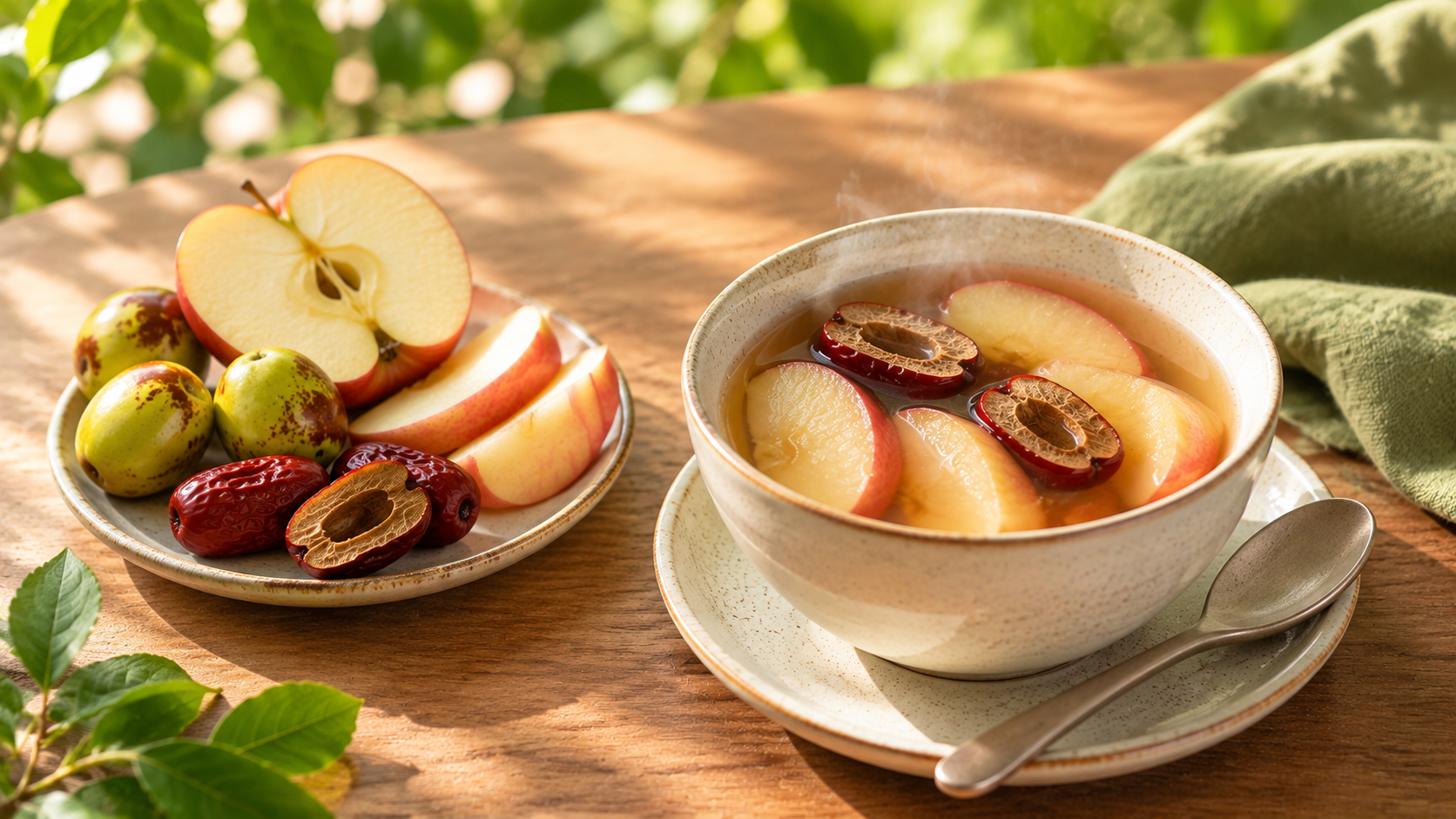
Choose the ingredients first, then divide the servings
This is an everyday dish, with no universal recipe for health benefits. The following sequence helps you keep track of what you eat without chasing a particular concentration, sweetness, or ratio.
- Decide how many people will share it, then set aside a suitable amount of apple and a small amount of dried jujube. Wash and core the apple. Split and pit the jujubes, checking for remaining hard pit fragments. Cut the fruit into manageable pieces.
- Simmer in plain water until it reaches the texture you prefer. Taste the fruit's own flavor first; there is no need to add rock sugar, honey, or syrup for supposed health benefits.
- Divide the liquid and fruit pieces together. Share them as evenly as practical, especially when someone needs to know their portion for blood glucose management.
- Include it in a planned meal or snack. Review how much you actually ate instead of feeling obliged to finish everything left in the pot.
If all the liquid and fruit are divided evenly and consumed, the ingredients and number of servings can provide a rough estimate of carbohydrate per serving. If you drink only the strained liquid, a home recipe cannot tell you precisely how much sugar entered it. Do not assume it is sugar-free or apply the nutrient values of the entire fruit portion directly to it. If you are simply thirsty, plain water is an easier option.
For blood glucose management, consider the whole day's eating plan
People with diabetes do not need to avoid all fruit, but carbohydrate from apples and both fresh and dried jujubes needs to fit into their existing meal plan. Smaller amounts spread through the day are generally easier to manage than a large amount at once. Softening fruit by cooking, or changing whether you eat it on an empty stomach or after a meal, cannot guarantee that it will have no effect on blood glucose.
If you already monitor glucose as advised, use your usual monitoring plan to observe your response to the portion you actually eat, and ask a clinician or dietitian for help with adjustments. Do not reduce medicines yourself because you have had fruit soup, or ignore portions because jujubes are a natural food. Follow your own care plan if you have special dietary or fluid restrictions.
Timing matters more than making it a bedtime ritual
Enjoying warm fruit soup does not mean you need it every night before bed. Apple and jujube soup is ordinary food and should not replace an assessment or treatment for insomnia. Drinking a large amount close to bedtime may lead to bathroom trips that interrupt sleep. Consider a small serving during the day or with dinner, and avoid leaving a large late meal or a lot of fluid until just before bed.
More useful habits include a reasonably consistent waking time and sleep schedule, limiting caffeine and alcohol near bedtime, and keeping the bedroom quiet and comfortable. Seek assessment if difficulty falling asleep, repeated waking, or waking too early persists, affects daytime energy and daily life, or has not improved after changes in habits. Tell a clinician about loud snoring or pauses in breathing during sleep as well. For persistent insomnia, a professional can assess whether cognitive behavioral therapy for insomnia (CBT-I) is appropriate. Repeatedly trying food remedies should not delay care.
Health information noticeThis article provides general health education and does not replace professional diagnosis, treatment or personalized advice about medicines. Do not start, stop or change medicines or treatment based solely on this article. Seek medical care for persistent symptoms and urgent help for emergency warning signs. Images are AI-generated illustrations, not real patient photographs, clinical test results or evidence of treatment outcomes.
Copyright and rights concernsIf you believe any text or image in this article infringes your rights, please contact this website at we@worldsleep.com and provide the article link, a description of the concern and supporting rights documentation. We will review the information and respond promptly.