Iron in red beans is mainly nonheme iron, and its absorption depends partly on the other foods in a meal. Their color cannot predict a “blood-building” effect. Learn how hemoglobin differs from iron stores, why the cause of deficiency matters, where dietary changes help, and when treatment, follow-up or assessment of restless legs symptoms is needed.
Pale skin, daytime fatigue and poor sleep may prompt someone to make red bean soup, hoping that “building up the blood” will solve all three. Red beans can be part of a balanced diet, but these symptoms do not establish iron deficiency. Food cannot take the place of finding the cause of anemia or treating it. A more useful sequence is assessment, investigation of the cause, appropriate treatment when needed, and improvements to everyday meals alongside it.
Red food does not automatically “build blood”
Here, red beans means edible pulses such as adzuki beans. They provide carbohydrate, plant protein, dietary fiber and some iron. Their red color does not mean that their components turn directly into blood. The body needs iron to make hemoglobin, which carries oxygen. Whether its needs are met depends on total intake, absorption, demand and iron losses, rather than the color of a food.
“Building blood” is not a diagnosis that can guide treatment. Anemia has several causes, including iron deficiency, vitamin B12 or folate deficiency, chronic disease and inherited hemoglobin disorders. Anemia does not always mean iron deficiency, and early iron deficiency may exist without anemia. Interpreting every change in energy or complexion as “not enough blood” can lead to the wrong response.
Distinguish hemoglobin from iron stores
Persistent fatigue, dizziness, palpitations, becoming more breathless than usual with activity, or a low hemoglobin result warrant assessment in primary care or an internal medicine clinic. A clinician will usually review the history and a complete blood count to assess anemia and red cell characteristics, then request ferritin or other iron studies as appropriate. Appearance alone is insufficient, and a single low serum iron result is not a basis for self-diagnosis.
Hemoglobin helps establish whether anemia is present; ferritin helps assess stored iron. They answer different questions. Iron stores can fall before hemoglobin drops below the normal range. Conversely, inflammation can raise ferritin, so a result within the reference range does not necessarily exclude iron deficiency. A clinician may interpret transferrin saturation, inflammatory markers and other findings together rather than relying on one flagged number.
Bring earlier laboratory reports and note when symptoms began, whether they limit activity, any change in menstrual bleeding, and recent diet, blood donation, digestive symptoms, medicines and supplements. Test selection and interpretation depend on factors such as age, pregnancy and chronic disease. A single number found online should not be treated as a diagnostic cutoff for everyone.
Finding the cause matters as much as replacing iron
Iron deficiency can result from inadequate intake, increased requirements, continuing blood loss or impaired absorption. Heavy periods, pregnancy, frequent blood donation, prolonged dietary restriction, digestive disease and previous gastrointestinal surgery are useful clues to share with a clinician. Heavy menstrual bleeding deserves assessment of its cause, rather than simply being tolerated and compensated for with food.
Adult men, postmenopausal women and anyone with recurrent or unexplained iron-deficiency anemia should be particularly cautious about attributing it solely to “poor nutrition.” A clinician will assess the risk of gastrointestinal blood loss, malabsorption and other causes, arranging further investigations when appropriate. The absence of obvious abdominal pain does not rule out a digestive tract problem. The investigations should reflect individual circumstances; everyone does not need the same set of tests.
Iron eaten is not the same as iron absorbed
Iron in plant foods such as red beans is nonheme iron. Its absorption is more sensitive to other foods in the meal and to the body's condition, and it is generally less readily absorbed than heme iron. Meat, poultry and fish can provide heme iron. People eating vegetarian diets can obtain iron from pulses, fortified foods and other sources, but need to plan food variety consciously rather than rely on one bowl of bean soup.
A practical option is to include red beans as part of the meal's starchy foods and pair them with vitamin C-containing produce such as sweet peppers, broccoli, tomatoes or citrus fruit to support nonheme iron absorption. Tea, coffee and substances such as phytate can affect iron availability. People with iron deficiency can have tea and coffee separately from their main iron-containing meals. There is no need to remove all whole grains or pulses; the overall pattern matters more than optimizing one combination.
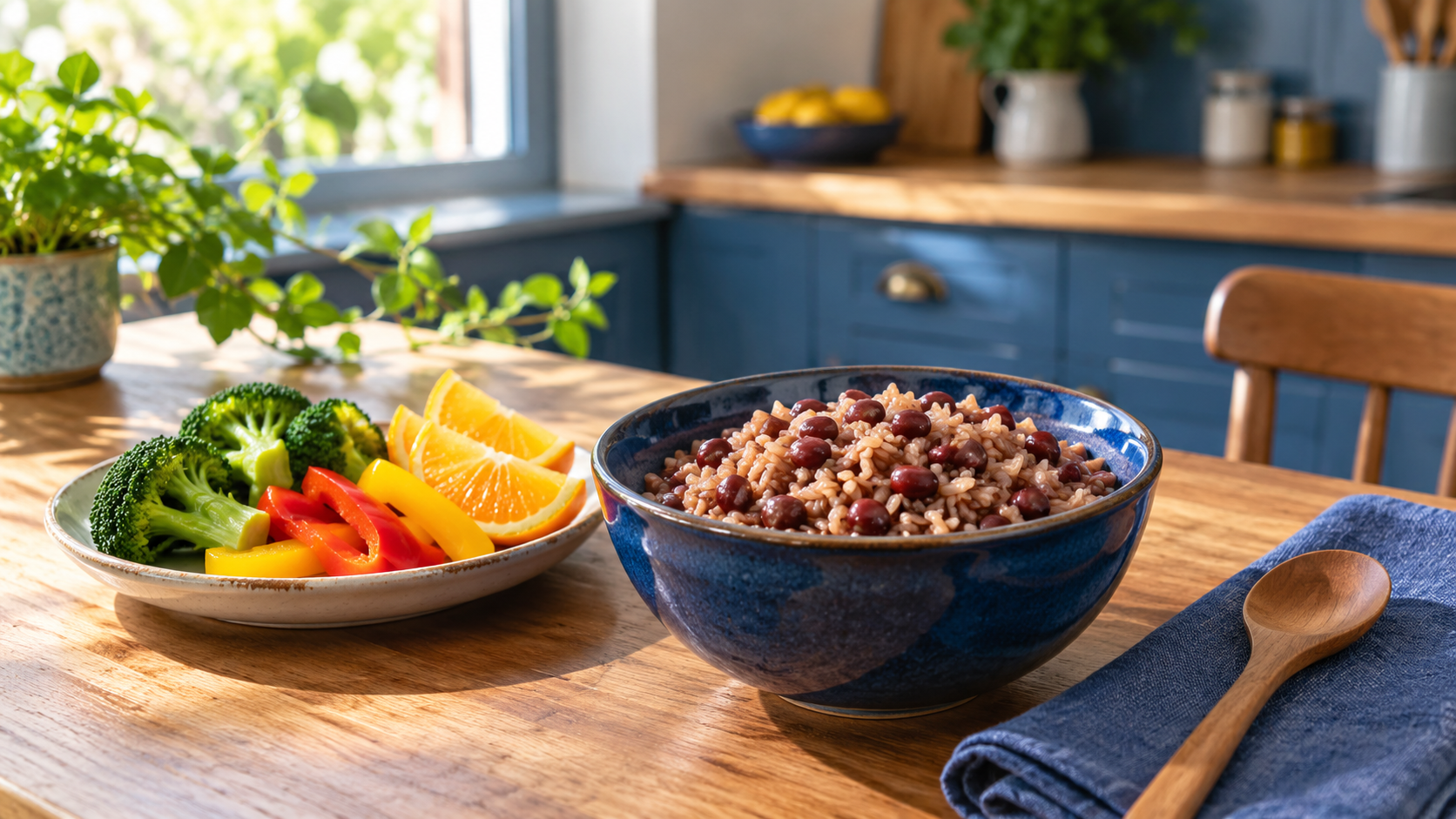
When comparing food iron values, distinguish dry weight, cooked weight and the amount actually eaten. A figure for dry beans cannot simply be applied to a bowl of thin soup. Choose meals such as red bean rice with little added sugar, and introduce pulses gradually according to digestive tolerance. A large serving of sweet bean paste or soup does not become a treatment because it contains iron. These meal suggestions support a varied diet; they cannot predict how much of an iron deficit will be corrected.
Use food alongside treatment and assess progress with follow-up
Confirmed iron-deficiency anemia often requires clinician-directed iron replacement, together with treatment of blood loss or an absorption problem. Oral iron is commonly used. A clinician may consider intravenous iron or another approach when oral treatment is not tolerated, is ineffective, absorption is impaired or correction is more urgent. Red beans cannot deliver the same controlled iron replacement as medicine. “Trying food first” should not postpone treatment indefinitely.
Follow the planned checks of hemoglobin and, when needed, iron stores. Feeling more energetic does not prove that stores have recovered, and complexion alone is not a reason to stop treatment. Report nausea, abdominal pain or constipation from oral iron so the regimen can be adjusted. If follow-up results are disappointing, medicine use, continuing blood loss and absorption may need review; do not simply double the dose yourself.
Not everyone needs an iron supplement. Excess iron can be harmful, and supplements can interact with some medicines. Pregnancy, childhood and chronic disease require appropriate individual plans rather than copying another adult's experience. Keep iron products out of children's reach.
When poor sleep calls for an iron assessment
Insufficient sleep can itself cause fatigue, but that does not establish iron-deficiency anemia. Equally, finding iron deficiency does not explain every case of insomnia. Tell a clinician if uncomfortable legs and a strong urge to move occur while resting at night, temporarily ease with movement and repeatedly interfere with falling asleep. These details help assess restless legs syndrome and other possible causes.
For clinically significant restless legs syndrome, sleep medicine guidance recommends assessment of ferritin and transferrin saturation to help determine whether iron treatment is appropriate. This is care for a specific symptom pattern, not a recommendation that everyone with insomnia take iron. The fact that red beans contain iron does not establish a sleep-promoting effect. Keep a regular sleep schedule, while seeking targeted assessment for persistent leg discomfort or sleep problems.
Do not wait for a dietary remedy in these situations
Arrange timely assessment for persistent pallor, fatigue, palpitations or reduced exercise tolerance. Contact a clinician promptly for relevant symptoms during pregnancy or markedly increased menstrual bleeding. Seek emergency help for chest pain, marked breathlessness at rest, fainting, vomiting blood, or black tarry stools with substantial weakness. Iron can darken stools, but signs of abnormal bleeding accompanied by illness should not automatically be attributed to a supplement.
Red beans can remain on the menu. For someone concerned about both anemia and poor sleep, matching symptoms to test results, identifying iron losses or absorption problems, and following treatment and monitoring plans offer a more useful response than increasing the frequency of bean soup.
Health information noticeThis article provides general health education and does not replace professional diagnosis, treatment or personalized advice about medicines. Do not start, stop or change medicines or treatment based solely on this article. Seek medical care for persistent symptoms and urgent help for emergency warning signs. Images are AI-generated illustrations, not real patient photographs, clinical test results or evidence of treatment outcomes.
Copyright and rights concernsIf you believe any text or image in this article infringes your rights, please contact this website at we@worldsleep.com and provide the article link, a description of the concern and supporting rights documentation. We will review the information and respond promptly.