Vegetables cannot “alkalize” the body and are not sleep remedies. Start with the general advice of at least 300 grams of fresh vegetables daily, with deeply colored vegetables making up at least half. Plan raw edible portions across meals, rotate varieties, and distinguish chewing problems from swallowing difficulties.
When planning vegetables for middle-aged and older adults, there is no need to start with an “acid–alkaline food” chart. More useful questions are how much was actually eaten, whether different vegetables were included, whether they can be chewed and swallowed safely, and whether the meal still has room for staple foods and protein. The suggestions below are for people who generally eat normally and have no special dietary restrictions. A marked fall in food intake or existing swallowing problems calls for an adapted plan first.
Vegetables do not create an “alkaline body”
Neither a food’s sour taste nor its supposed acid- or alkaline-forming effect after digestion directly indicates how healthy a person is. Normally, the lungs, kidneys and the body’s buffering systems work together to keep blood pH stable. Ordinary eating does not produce the lasting “alkaline body” advertised in wellness claims. A change in urine pH after eating does not show that the body has been “alkalized,” either. Acid–base disturbances caused by disease are medical problems, not something to correct by choosing a few vegetables.
Vegetables contribute fiber, vitamins and minerals and add variety to the overall diet. Okra’s sticky texture and broccoli’s color are not evidence of blood-glucose-lowering or sleep-promoting effects. Do not exclude grains, meat, eggs, dairy or soy foods in pursuit of “alkalinity,” or treat any one vegetable as medicine.
Divide the daily amount between meals
China’s National Health Commission recommends vegetables at each meal, at least 300 grams of fresh vegetables daily, and deeply colored vegetables making up at least half. This is a starting point for meal planning in the general population, not a competition to eat as much as possible or a treatment prescription everyone must follow.
To make preparation easier, all amounts in this example mean raw weight before cooking, after inedible parts are removed. One person’s day could include the following, totaling about 400 grams:
- Breakfast: 100 grams of tomato, added to an egg dish or noodles.
- Lunch: 100 grams of bok choy or a similar leafy green, with 50 grams of carrot.
- Dinner: 100 grams of broccoli, with 50 grams of fresh shiitake mushrooms.
This illustrates how to distribute vegetables, rather than prescribing a fixed menu. The leafy greens, broccoli and carrots alone already make up more than half of the total. Substitute locally available seasonal vegetables from similar groups. When cooking for two, start with the number of diners, then divide dishes according to each person’s appetite; do not count a whole shared dish as one person’s intake.
Weigh vegetables a few times with a kitchen scale to learn what your own bowls hold. Vegetables differ in how loosely they pack and how much they shrink during cooking, so “a bowl” or “a handful” cannot always mean 100 grams. A few leaves in soup are not a vegetable serving: count the vegetables actually eaten, rather than the volume of soup drunk.
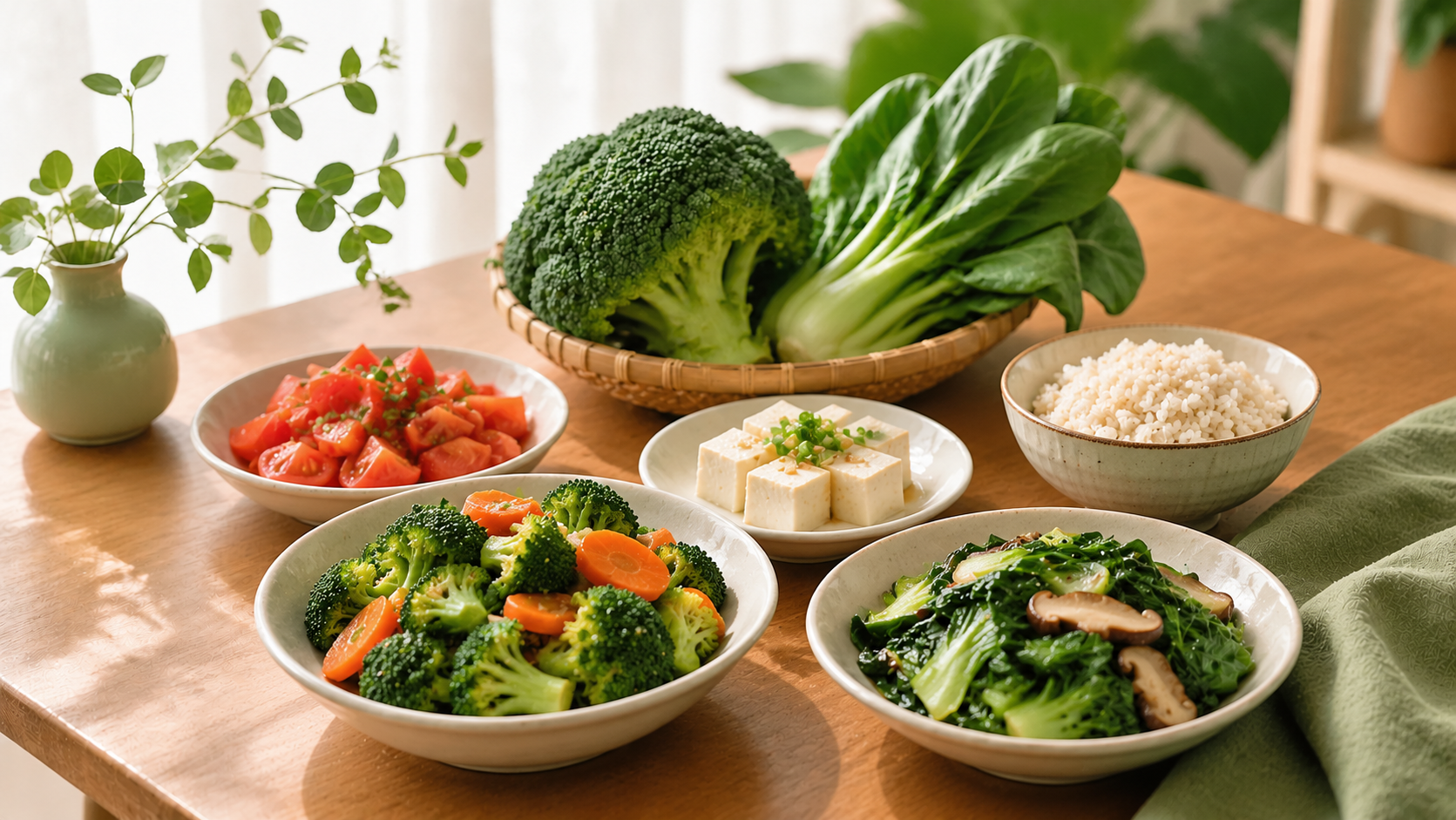
Rotate varieties and distinguish different plant foods
When shopping, start with a dark green vegetable such as bok choy, spinach or broccoli, then add carrots, tomatoes, winter melon, cauliflower or mushrooms. Deep color refers to the edible parts of dark green, red or orange-yellow vegetables, not simply the color of their skin. Aim for three to five kinds a day, spread across meals; every meal does not need numerous separate dishes. Ordinary seasonal produce provides variety on a limited budget without costly “wellness vegetables.”
Chinese yam, potatoes and taro contain substantial starch. When serving them, consider the amount of rice, noodles and other staples in the same meal, rather than adding them freely as if they were leafy greens. Nor can they replace dry rice gram for gram. Tofu supplies protein but does not replace vegetables, and vegetables do not replace fish, eggs, dairy or soy products. Kelp and similar foods can occasionally add variety; there is no need to eat large amounts every day or use them to “rebalance” the body.
Prepare vegetables for safety and comfortable eating
Wash your hands, discard rotten produce and wash vegetables thoroughly under running water. Do not use dishwashing liquid or soap on food. Keep knives and cutting boards for ready-to-eat vegetables separate from those used for raw meat to prevent cross-contamination. Refrigerate pre-cut vegetables promptly, and check refrigeration conditions and package instructions when buying pre-cut or bagged produce. Washing does not sterilize food. Older adults in particular should avoid raw or only lightly cooked sprouts.
Try steaming, boiling, stewing, braising or stir-frying with a small amount of oil. Divide broccoli into small florets, peel tough stalks and slice them; cut carrots into thin slices; and remove or shorten tough stems and long fibers in leafy vegetables. Cook longer when a softer texture is needed instead of preserving a crunch that makes the food hard to chew. Mushrooms, scallions and ginger can add flavor while using less oil, salt and salty sauces. A lighter meal should still be appealing enough to eat.
Chewing difficulty and swallowing difficulty need different approaches
If chewing is difficult but swallowing is normal, cut vegetables into smaller pieces, cook them until soft, choose tender leaves and peeled squashes, and pair them with tofu or eggs. Reduce dry, tough components. Toothache, missing teeth and poorly fitting dentures also warrant dental care. Hard foods such as peanuts are not a required part of these vegetable combinations; their nutrients are no reason to struggle with whole nuts.
Seek prompt medical care and swallowing and nutrition assessment for repeated coughing or choking while eating or drinking, food feeling stuck, a wet-sounding voice after meals, progressively longer meals or unexplained weight loss. Chopping or cooking until soft does not make food safe for every swallowing disorder. Do not try to solve the problem on your own by switching to vegetable juice, thin soup or porridge. Food texture, liquid thickness and eating techniques should be chosen after professional assessment. For severe choking with inability to breathe or speak, call local emergency services immediately.
With a small appetite, protect the nutrition of the whole meal
An older person with a small appetite does not need to force down the entire day’s vegetables at once. Spread them between meals and combine them with staples and foods such as fish, eggs or tofu in manageable dishes. If vegetable intake has been low, begin by adding a little at one meal and gradually build a habit. Persistent bloating, abdominal pain or a marked change in bowel habits calls for adjusting the vegetables or preparation method and, when necessary, medical advice.
Persistent poor appetite, steadily declining intake, unintentional weight loss or marked fatigue needs investigation. Continuing to restrict calories or eating only vegetables is not the answer. If you have a prescribed dietary restriction, discuss these general suggestions with your clinician or a nutrition professional to decide on suitable portions.
Make meal planning a habit, not a sleep treatment
These combinations help with everyday meal planning; they cannot guarantee an improvement in insomnia or justify calling any dish a “sleep-promoting vegetable.” Plan dinner around your appetite and ability to eat, without trying to make up the whole day’s vegetable intake just before bed. Persistent poor sleep, especially when it affects daytime alertness and daily life, needs its own assessment. Vegetables or an “alkaline diet” should not replace diagnosis and care.
Health information noticeThis article provides general health education and does not replace professional diagnosis, treatment or personalized advice about medicines. Do not start, stop or change medicines or treatment based solely on this article. Seek medical care for persistent symptoms and urgent help for emergency warning signs. Images are AI-generated illustrations, not real patient photographs, clinical test results or evidence of treatment outcomes.
Copyright and rights concernsIf you believe any text or image in this article infringes your rights, please contact this website at we@worldsleep.com and provide the article link, a description of the concern and supporting rights documentation. We will review the information and respond promptly.