After long periods of typing, using a mouse or scrolling on a phone, gentle hand movements can be part of a break. This guide explains simple movements without resistance, comfortable limits and when to stop, along with ways to change repetitive hand use and wind down before bed. Hand exercises do not replace whole-body activity, insomnia treatment or assessment of abnormal symptoms.
After a long stretch of typing, using a mouse, scrolling on a phone or doing craft work, it is natural to want to open your hands and move your fingers. This can be a useful opportunity to pause repetitive hand use. However, ordinary hand movements do not justify claims that moving a particular finger can regulate internal organs, relieve insomnia or strengthen the back and legs. A more appropriate aim is to change position, release sustained effort and notice whether the movement feels comfortable.
The main value lies in hand movement and taking a break
Bending and straightening the fingers or lightly touching the thumb to the fingertips moves the hand joints and related tendons within a tolerable range. Clinical hand exercise advice also includes gentle movement for managing some mild stiffness and hand conditions. Advice intended for particular patients does not establish that one routine suits everyone, or that it prevents every injury associated with hand use.
For people who sit and use their hands for long periods without significant hand symptoms, these movements can be an optional part of a break. Feeling more comfortable afterwards is an immediate personal experience. It does not show that pressure on a nerve has been relieved, or that an internal organ or sleep quality has improved. Promises that individual fingers correspond to particular organs should not guide the choice of exercises.
Separate everyday relaxation from rehabilitation after injury
The movements below are intended for people without a recent hand injury, significant pain, swelling or numbness who would like to move during breaks from everyday hand use. Put down your phone or tools, release your grip, sit securely and relax your shoulders. Support the forearms comfortably, without pressing the wrists or pushing them against a desk edge.
If you have recently had a sprain or fracture, still have restrictions after surgery, or are receiving treatment for a hand condition, follow your clinician's or therapist's plan. An exercise that looks simple is not a reason to increase its range or replace an existing rehabilitation program. These gentle movements are also not tests for diagnosing hand pain or numbness.
Try gentle movements without resistance
Start with one movement, go slowly and breathe normally. Choose from the options below according to comfort. You do not have to finish the whole sequence or achieve the same range in both hands.
- Make a loose fist, then open: Support the forearm with the wrist roughly in line with it. Slowly curl the fingers into a loose fist, then gently open them. Bend only as far as feels comfortable. The fingertips do not have to reach the palm, and the joints should not be pushed backwards.
- Touch the fingertips with the thumb: Lightly touch the thumb to the index, middle, ring and little fingertips in turn, then relax. Touch rather than pinch hard. If a fingertip is difficult to reach, use a smaller movement or skip it; do not pull the fingers into position with the other hand.
- Turn the forearm gently: Rest the elbow and forearm on a table. From a comfortable starting position, slowly turn the palm upwards and then downwards. Keep the hand roughly in line with the forearm. Do not twist the shoulder or body to gain extra movement. Stop at resistance rather than forcing the end of the range.
Let the hands relax between movements. Everyday relaxation does not require a grip trainer, resistance band, forceful ball squeezing or making every finger joint crack. Rehabilitation exercises for strength, tendons or nerves have different purposes and should be selected by a professional for the individual situation.
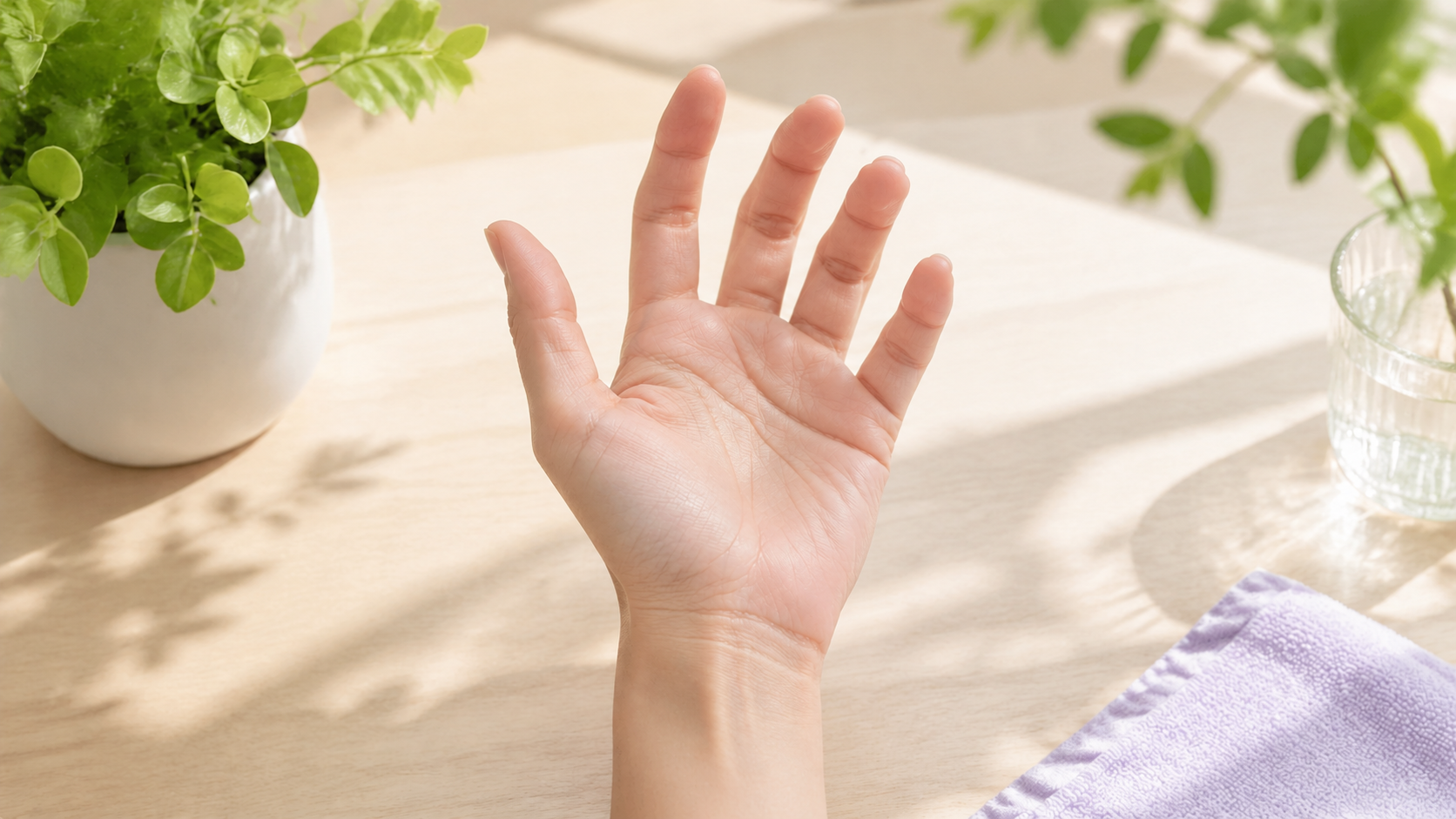
Comfort matters more than a repetition target
There is no universal wellness repetition count or guaranteed effective duration for everyone who sits and uses their hands for long periods. Pause briefly when finishing a piece of work or switching tasks, and choose a small amount of gentle movement. You need not wait for significant discomfort before taking a break, or repeat movements over and over to meet a target. The purpose is to interrupt sustained hand use, rather than add another repetitive workload.
Everyday relaxation does not require soreness. Stop if there is pain, tingling, numbness, a marked pulling sensation or swelling. If discomfort persists or repeatedly returns afterwards, reduce the provoking activity and seek assessment. Do not increase the exercise on the assumption that more movement will somehow clear a blockage.
Change the way you work as well
Small hand movements are only one part of a break. If work still involves a tight mouse grip, repeated thumb movements or a wrist held bent for long periods, returning to that same workload afterwards is unlikely to be resolved by finger stretching alone. Looking at which movements you repeat, how much force you use and whether tasks can be divided up is usually more practical than seeking a complicated hand routine.
- Adjust the chair, keyboard and mouse so that the shoulders can relax, the elbows stay near the body and the wrists remain naturally aligned with the forearms. Avoid keeping the wrists bent upwards, downwards or sideways.
- Alternate different tasks when possible to reduce long, uninterrupted periods of the same action. Replace continued phone scrolling with time away from the screen and tools so that hand use actually changes.
- Also stand, walk and change position during breaks, giving the arms, shoulders, neck and the rest of the body a change. Finger movements do not replace whole-body activity or cancel out a day of prolonged sitting.
Use it as a bedtime relaxation cue, without a sleep target
If gentle movement feels comfortable, it can be part of winding down before bed: put away the phone, dim unnecessary bright light, release the hands and breathe naturally at your own pace. Soothing music or quiet reading are other options. This is a personal relaxation habit. Completing the movements does not guarantee that you will fall asleep faster.
A regular schedule, enough time for sleep, daytime physical activity and avoiding caffeine close to bedtime remain more basic sleep habits. If trouble falling asleep or waking during the night persists and affects daytime functioning, seek assessment. Cognitive behavioral therapy for insomnia (CBT-I) is usually considered a first treatment for long-term insomnia. Repeated finger routines cannot replace evidence-based care.
Pause and seek help if these changes occur
Arrange medical assessment for pain that recurs, worsens or limits everyday use, tingling or numbness, nighttime symptoms, reduced grip strength or frequently dropping things. You do not need to wait until movement becomes impossible. Repeated massage, forceful stretching or online self-tests should not be used to conclude that the problem is merely fatigue.
Severe pain, an obvious change in shape or color after an injury, inability to move the wrist or hold objects, or a marked loss of sensation calls for urgent medical help. Everyday relaxation and managing abnormal symptoms have different aims. When warning signs appear, stop the provoking movement and let a healthcare professional assess the next step.
A manageable habit is to link three actions: release your hands, change tasks and stand up. Finger movements can stay simple, without promises of extraordinary health effects. Their practical value is in helping you notice the demands of sustained hand use earlier and make room for a real break.
Health information noticeThis article provides general health education and does not replace professional diagnosis, treatment or personalized advice about medicines. Do not start, stop or change medicines or treatment based solely on this article. Seek medical care for persistent symptoms and urgent help for emergency warning signs. Images are AI-generated illustrations, not real patient photographs, clinical test results or evidence of treatment outcomes.
Copyright and rights concernsIf you believe any text or image in this article infringes your rights, please contact this website at we@worldsleep.com and provide the article link, a description of the concern and supporting rights documentation. We will review the information and respond promptly.