Vegetables cannot create an “alkaline constitution” and are not a prescription for lowering glucose or improving sleep. For middle-aged and older adults, meal balance, starchy foods and sodium matter more. Potassium restrictions in kidney disease depend on tests and treatment; people taking warfarin generally need consistent vitamin K intake rather than a blanket ban on leafy greens.
Middle-aged and older adults hoping to look after their blood glucose, blood pressure and sleep may be drawn to claims about “alkaline vegetables” or “miracle” foods for diabetes. A more useful approach is to consider vegetables within everyday meals, alongside test results and medicines. The general advice below suits most adults; people with kidney disease or taking warfarin should also follow the guidance specific to them.
Do not rank foods by an “alkaline constitution”
The lungs, kidneys and other systems regulate blood acidity. Eating particular vegetables cannot make the body “alkaline” to treat disease. Food can affect urine acidity, but readings from urine or saliva test strips cannot establish overall health or diagnose a supposed “acidic constitution.” A genuine acid–base disorder needs medical assessment.
Vegetables are recommended for their everyday nutritional contribution, including fiber, vitamins and minerals. Presenting a vegetable as a way to protect the kidneys, treat diabetes or cure insomnia reduces long-term care to a food remedy. Avoid arbitrarily removing grains, eggs or other protein sources because someone calls them “acidic foods.”
Build a meal first, then choose vegetables you enjoy
Start with familiar, affordable vegetables you like. Rotate leafy greens, squash and other fruiting vegetables, mushrooms and cruciferous vegetables rather than focusing on one dark-green ingredient. Broccoli and okra can be ordinary side dishes; there is no need to drink special “wellness water” made from them or replace a whole meal with a single vegetable.
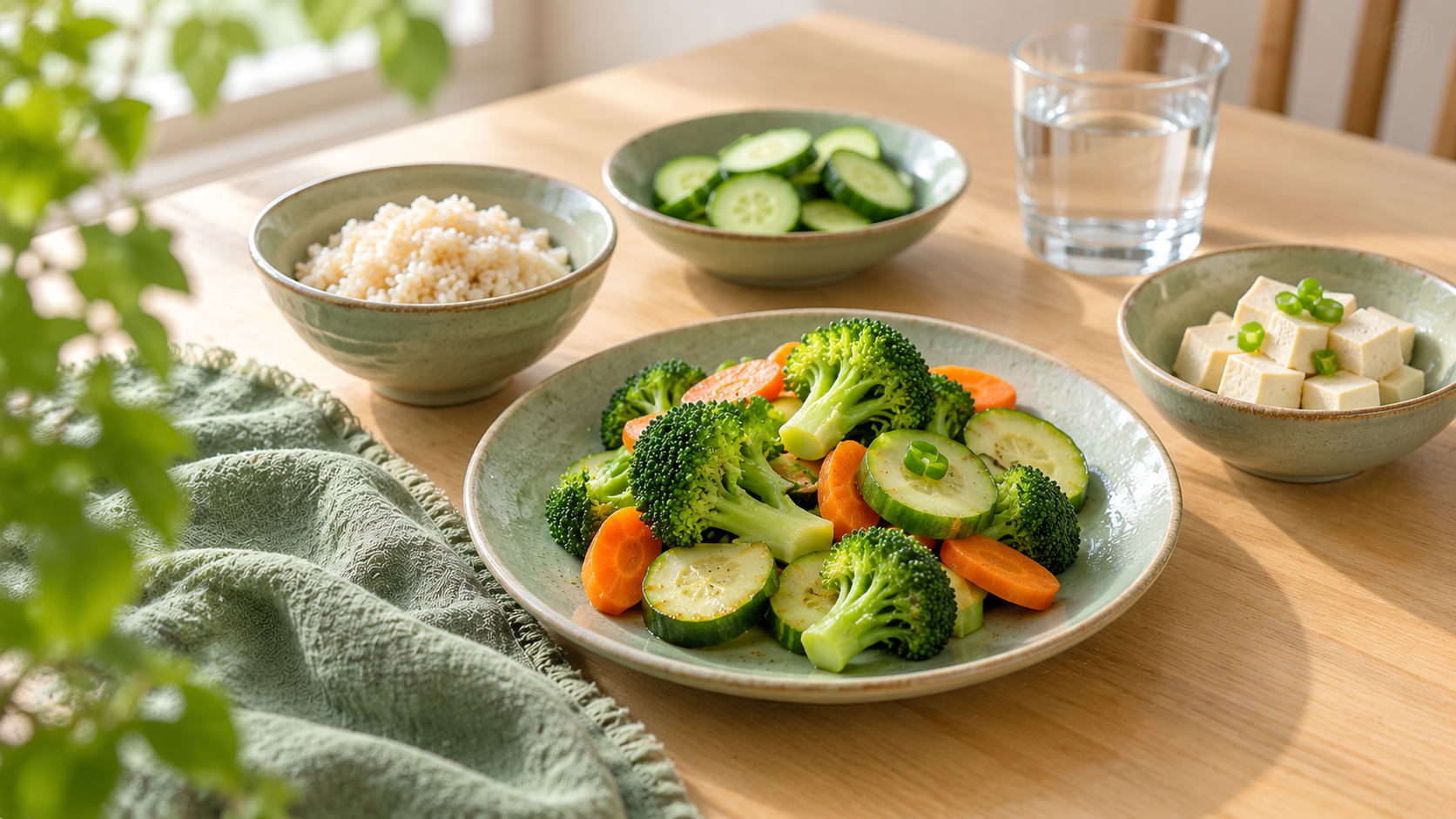
The diabetes plate method offers a starting point for meal planning: about half the plate contains nonstarchy vegetables, with the remaining sections for protein foods and carbohydrate foods such as rice or other staples. This is a tool for understanding balance, rather than a fixed prescription for everyone. People who need potassium restrictions, eat very little or are undernourished should have the approach adapted by a clinician or dietitian first.
Tofu can be a protein choice and does not need to be banned simply because someone has a chronic condition. Recognize it as a protein food when planning a meal, rather than treating it as just another vegetable and overlooking protein needs. Peanuts and other nuts contain fat, so portions matter; choose unsalted versions when possible. With kidney disease, total protein intake also depends on the treatment stage, so do not copy someone else's low-protein menu.
For glucose and blood pressure, consider starch and seasoning
Starchy foods such as potatoes, corn and Chinese yam count toward a meal's carbohydrate intake. Being called a vegetable does not make them unlimited extras on top of rice, noodles or bread. When adding potatoes, for example, replace some of the usual staple according to the existing meal plan. The amount depends on appetite, medicines and glucose monitoring. Okra's slippery texture is not evidence of a glucose-lowering drug effect, and vegetables cannot cancel out sugary drinks or excessive portions of carbohydrate foods.
For blood pressure management, preparation matters too. Greens cooked with plenty of salt, soy sauce, oyster sauce or concentrated stock can still supply substantial sodium. At home, begin by reducing the number and amount of salty seasonings, and compare sodium on packaged-food labels. Lighter cooking does not require eliminating all oil or eating only boiled vegetables. Enjoyable food in suitable portions is easier to keep eating over time.
Potassium restrictions in kidney disease depend on tests and treatment
Chronic kidney disease does not mean everyone needs to eat fewer vegetables. The care team should decide whether potassium needs restricting based on blood potassium, kidney function, medicines and dialysis status, among other factors. Someone with early kidney disease and normal potassium may not need a strict restriction. Repeated high results or a clinician's assessment of high risk call for an individualized plan. Age, vegetable color and an online list of high-potassium foods are not enough to decide what to ban.
If potassium restriction is needed, discuss food choices, portions and preparation with a kidney dietitian. Boiling or soaking certain vegetables and discarding the water can remove some potassium, but the effect varies by food and method. It does not make unlimited servings safe or treat an already high blood potassium level. Large amounts of lower-potassium foods can also add up. People without a specific need do not have to repeatedly soak and boil every vegetable to make it “healthier.”
Check the salt in the kitchen and ingredient lists too: some lower-sodium salts and salt substitutes contain potassium chloride and are not suitable for every person with kidney disease. Ask the care team before switching if potassium is high or there is a risk of it becoming high. Abnormal potassium may also involve medicines or dialysis arrangements, so changing vegetables alone may not solve it; do not stop medicines on your own. Potassium, protein, phosphorus and fluid plans address different needs and should not become a blanket instruction to eat less of everything.
With warfarin, keep vitamin K intake reasonably consistent
This advice is for people taking warfarin. Vitamin K in foods such as spinach, broccoli and other leafy greens affects warfarin's anticoagulant action, but these foods usually do not need to be eliminated. Aim for reasonably consistent intake rather than suddenly going from almost none to large amounts every day, or stopping them completely. Consistency does not mean eating the same vegetable in exactly the same number of grams each day.
Before a major dietary change or starting a supplement containing vitamin K, contact the anticoagulation clinic. Follow the monitoring plan, including international normalized ratio (INR) tests, and let the clinician decide whether the dose needs changing. This vitamin K consistency requirement does not usually apply to direct oral anticoagulants such as apixaban and rivaroxaban. Medicines called “blood thinners” should not all be given the same vegetable avoidance list. If you are unsure which medicine you take, bring its packaging to a clinician or pharmacist.
Turn the advice into shopping, cooking and follow-up steps
- Review the current care plan first. Bring together diagnoses, recent test results and the medicine list to establish whether potassium restriction or consistent vitamin K intake actually applies. When several chronic conditions coexist, ask for one complete plan that also meets nutritional needs.
- Make small changes you can maintain. Reduce one frequently used salty sauce, then plan a rotation of everyday vegetables. If vitamin K intake needs to stay consistent, keep overall intake reasonably steady while rotating choices. Avoid suddenly eating a large amount of vegetables one day and none the next.
- Bring specific records to follow-up. Note usual vegetables, portions, seasonings and recent changes. Ask whether blood potassium is in the intended range and whether meals need adjusting. A marked loss of appetite or ongoing unintentional weight loss calls for assessment by a clinician or dietitian, rather than further food restrictions.
Vegetables are not a sleep prescription; warning signs need care
These suggestions help with everyday meal planning and chronic disease care. They do not justify a promise that eating more of a particular vegetable will improve sleep. If ongoing poor sleep affects daytime functioning, raise it as a separate concern and bring food and medicine records to the appointment, rather than repeatedly trying different “sleep-promoting” recipes.
People with kidney disease should attend scheduled tests even when they feel well, because high potassium can have no obvious symptoms. Sudden palpitations, chest pain or shortness of breath require immediate emergency care. Do not stay home waiting for improvement after cutting out vegetables. Significant bleeding, blood in the urine or blood in the stool while taking warfarin also requires prompt medical attention.
Health information noticeThis article provides general health education and does not replace professional diagnosis, treatment or personalized advice about medicines. Do not start, stop or change medicines or treatment based solely on this article. Seek medical care for persistent symptoms and urgent help for emergency warning signs. Images are AI-generated illustrations, not real patient photographs, clinical test results or evidence of treatment outcomes.
Copyright and rights concernsIf you believe any text or image in this article infringes your rights, please contact this website at we@worldsleep.com and provide the article link, a description of the concern and supporting rights documentation. We will review the information and respond promptly.