Water, detox regimens, and particular movements do not replace treatment for vascular disease. Protect blood vessels through smoking cessation, a balanced diet, regular activity, sleep, and management of blood pressure, cholesterol, and blood glucose. Continue prescribed treatment and recognize possible sleep apnea and cardiovascular emergency warning signs.
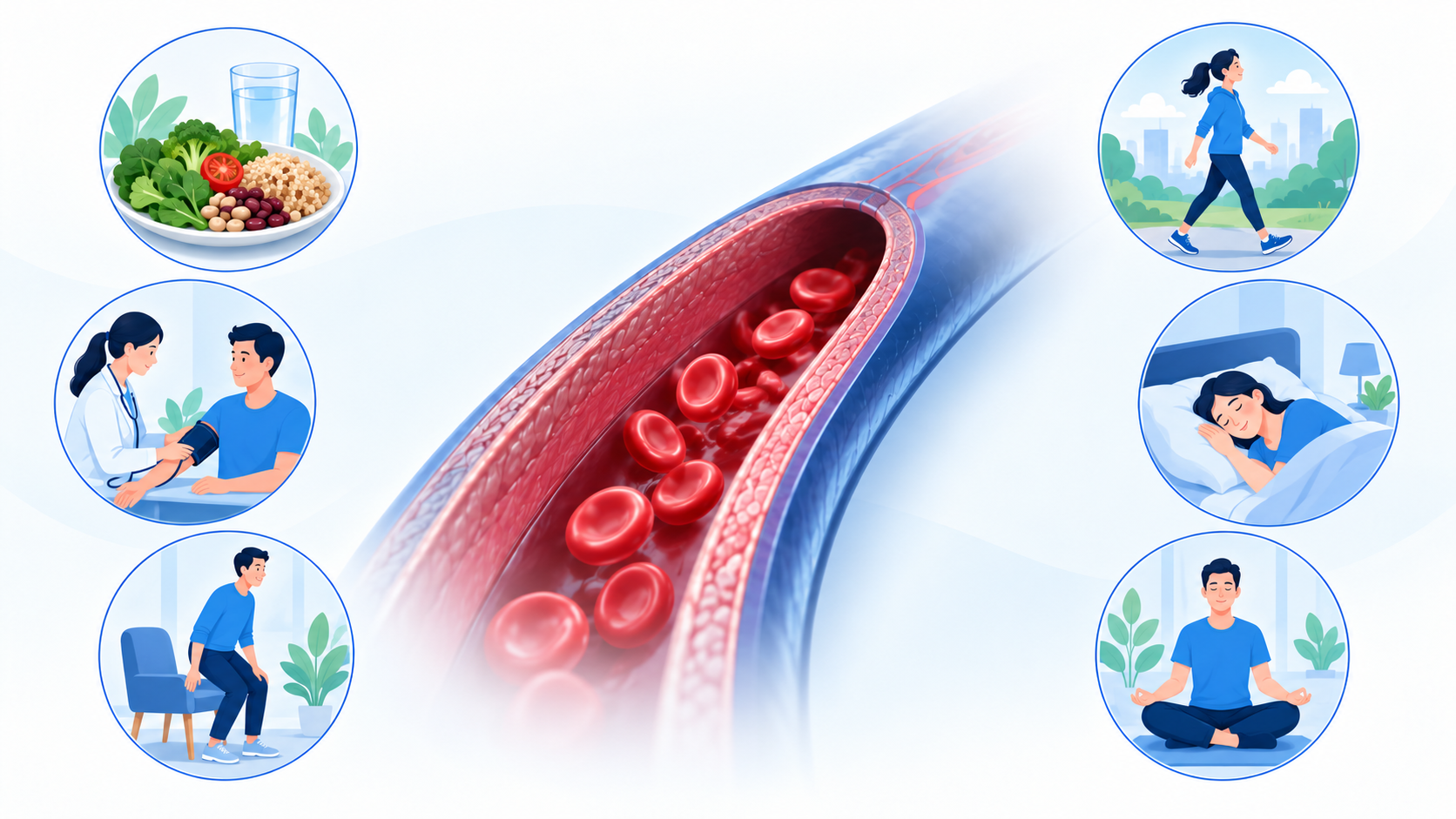
Protecting your blood vessels starts with managing risks you can change over time, rather than searching for a food or movement that will “clean” them. This advice is mainly for adults. If you have high blood pressure, abnormal cholesterol, diabetes, or cardiovascular disease, put healthy habits into practice alongside your established treatment. Sleep is part of that plan, but it cannot cancel out smoking, poorly controlled health measures, or missed medicines.
“Cleaning blood vessels” is not a routine health treatment
Atherosclerosis involves plaque containing cholesterol, fats, calcium, and other substances building up within artery walls. It is not a layer of dirt inside a pipe that water can flush away. Drinking warm water or eating garlic or wood ear mushrooms should not be treated as a way to remove plaque. Patting the body, swinging the arms, rising onto the toes, or doing a particular stretch is not a treatment for opening a narrowed artery or dissolving a blood clot. Some movements can count as light activity, but that does not justify claims that they “unblock” vessels.
Reliable evidence does not support claims that detox teas, “artery cleansing” supplements, or juice fasts can achieve these effects. Some detox regimens can cause diarrhea, dehydration, or electrolyte disturbances. Appropriate medical treatment helps manage risk and can sometimes stabilize or improve plaque. It cannot promise to return vessels to a particular “youthful” state, and it does not mean a home remedy can eliminate risk in a short time.
Improve the overall eating pattern through practical swaps
Include vegetables, fruit, whole grains, beans, and moderate portions of nuts in everyday meals, with protein sources such as fish, tofu, and lean meat. Replace some lard or butter with moderate amounts of plant oils rich in unsaturated fats, and cut back on fatty meat, fried foods, and sugary desserts. Both the type and amount of fat matter. There is no need to avoid all fats or eat only fruit and vegetables to “purify” the body.
Reducing salt means more than using less at the stove: consider soy sauce, pickled foods, processed meats, and salty takeaway broths too. General guidance for adults is less than 5 grams of salt a day in total, including salt already present in food and condiments. Replacing a sugary drink with water or adding some whole grains to a staple meal can be a manageable start. People with kidney disease or a prescribed diet need an individual plan rather than simply copying a general menu.
Make quitting smoking and avoiding tobacco smoke a priority
Quitting smoking is an important way to reduce cardiovascular risk, even after many years of smoking. A healthcare professional can help you make a quit plan and discuss behavioral support and suitable treatment. Keep your home and car smoke-free and avoid secondhand smoke where possible. Do not use alcohol as a way to protect blood vessels or help you sleep. If you drink, reducing your intake can be part of your plan; avoid drinking before bed in particular.
Activity helps manage risk but does not replace treatment for blocked arteries
Most adults can gradually work toward at least 150 minutes of moderate-intensity physical activity each week, such as brisk walking or cycling. Start with short, tolerable walks and build up. You do not need to do it all at once or make up the total with an intense weekend session. Walking for transport, housework, and breaking up long periods of sitting also matter. Use a water break, phone call, or pause between tasks to get up and move, rather than treating a fixed number of minutes between standing breaks as a medical prescription for everyone.
If you have cardiovascular disease, limited mobility, or an unstable medical condition, agree on an activity plan with your clinician. Cardiac rehabilitation may be appropriate if you are eligible. New chest pain, marked breathlessness, or fainting needs medical assessment first. Do not test whether your arteries are “open” by climbing stairs or exercising intensely. Stop if these symptoms occur during activity and seek urgent help as appropriate to the symptoms.
Consider sleep regularity, duration, and breathing
Most adults generally need about 7–9 hours of sleep a night, with attention to quality and regularity too. Ongoing insufficient or poor-quality sleep is linked with cardiovascular and metabolic health problems. That does not mean a single late night blocks an artery, or that a few early nights will “repair” blood vessels. Start with a consistent wake-up time, allow enough opportunity to sleep, arrange suitable daytime activity, and set aside quiet time before bed. Reduce bright light and caffeine that interferes with falling asleep.
Tell a clinician if you frequently snore loudly, someone notices pauses in your breathing during sleep, or you repeatedly wake up gasping or feel very sleepy in the daytime. A sleep study may be needed. These can be signs of sleep apnea, rather than evidence that you are simply sleeping deeply. Going to bed earlier alone may not solve the problem. Persistent insomnia, anxiety, or low mood also deserves professional support.
Give yourself a practical outlet for stress, such as a daytime walk, a brief relaxation break, or talking to someone you trust. The aim is to make everyday management sustainable, not to expect yourself to stay calm all the time or blame illness on “thinking too much.”
Review health measures and follow-up plans, and continue prescribed treatment
Feeling well does not prove that your blood pressure, cholesterol, or blood glucose is normal. Discuss what to monitor and when to repeat tests with a clinician, taking account of your age, family history, medical history, and previous results. Understand your individual goals for blood pressure, LDL cholesterol, and blood glucose. A single reading, a weight change, or the temperature of your hands and feet does not establish the condition of your arteries. Repeatedly buying “vascular age” tests for reassurance is not a substitute for an appropriate assessment.
If you have been prescribed blood pressure medicines, cholesterol-lowering medicines, or other treatment, improve your habits alongside that treatment. Do not stop it, reduce doses, or replace it with supplements on your own. Better results may be a sign that treatment is working. Discuss suspected side effects or difficulty taking medicines with your clinician or pharmacist, and keep planned follow-up appointments. Do not start aspirin yourself to “prevent clots”: suitability depends on balancing disease risk against bleeding risk.
Recognize emergencies instead of treating sudden symptoms as a habit problem
Call local emergency services immediately for new, persistent or recurring chest pressure, tightness, or pain, especially with shortness of breath, a cold sweat, nausea, or discomfort spreading to the arms, back, neck, or jaw. A heart emergency can also occur without typical chest pain. Do not wait to see whether sleep, water, or massage helps, and do not drive yourself to hospital.
Sudden facial drooping, weakness or numbness on one side, slurred speech, a change in vision, or a marked loss of balance can be stroke warning signs. Get an emergency assessment even if the symptoms disappear. Note when symptoms first started and follow the emergency team's instructions.
Start with changes you can sustain this week
Choose one or two manageable steps: replace sugary drinks with water, plan a daily walk, interrupt long sitting periods, or keep a consistent wake-up time. If you have prescribed treatment, organize medicines and follow-up at the same time. If you smoke, make seeking help to quit a priority. Vascular health benefits from sustained risk management, rather than a single “detox,” and you do not need perfect habits before you begin.
Health information noticeThis article provides general health education and does not replace professional diagnosis, treatment or personalized advice about medicines. Do not start, stop or change medicines or treatment based solely on this article. Seek medical care for persistent symptoms and urgent help for emergency warning signs. Images are AI-generated illustrations, not real patient photographs, clinical test results or evidence of treatment outcomes.
Copyright and rights concernsIf you believe any text or image in this article infringes your rights, please contact this website at we@worldsleep.com and provide the article link, a description of the concern and supporting rights documentation. We will review the information and respond promptly.