Black soybeans are ordinary nutritious soy foods, but their dark color does not establish benefits for kidney function, gray hair or insomnia. Human studies of seed coat extract cannot be converted into sleep-promoting recipes. Learn how to distinguish products, read labels, cook and store them safely, recognize allergy risks and seek help for recurring poor sleep.
Black soybean rice, soy milk and powders are often marketed for “kidney nourishment,” darker hair or better sleep. Black soybeans can add variety to meals, but claims about gray hair or recurring insomnia require a separate assessment. A food containing nutrients, an extract being tested in an experiment and eating that food treating a condition are three different propositions. Confusing them can waste money and delay appropriate care.
Identify the bean before comparing nutrition
This article concerns black soybeans, which are soybean varieties like yellow soybeans. They should not be confused with black common beans. Black soybeans supply plant protein, fat and other nutrients; most of their fat is unsaturated. Their main nutritional characteristics resemble those of yellow soybeans, so a darker coat does not justify ranking them as a superior health food. Adzuki and mung beans contain more starch, and their appearance does not make them equivalent nutritional substitutes for soybeans by weight.
Whole black soybeans, tofu and soy milk also cannot be compared simply by using equal weights. Processing, added water and other ingredients change the finished product. For a meal, choose a soy food that suits you and serve it with a staple grain and vegetables. If the meal already includes tofu or soy milk, there is no need to add black soybean powder and snacks simply to collect more dark foods. There is no special requirement to eat extra black soybeans in summer.
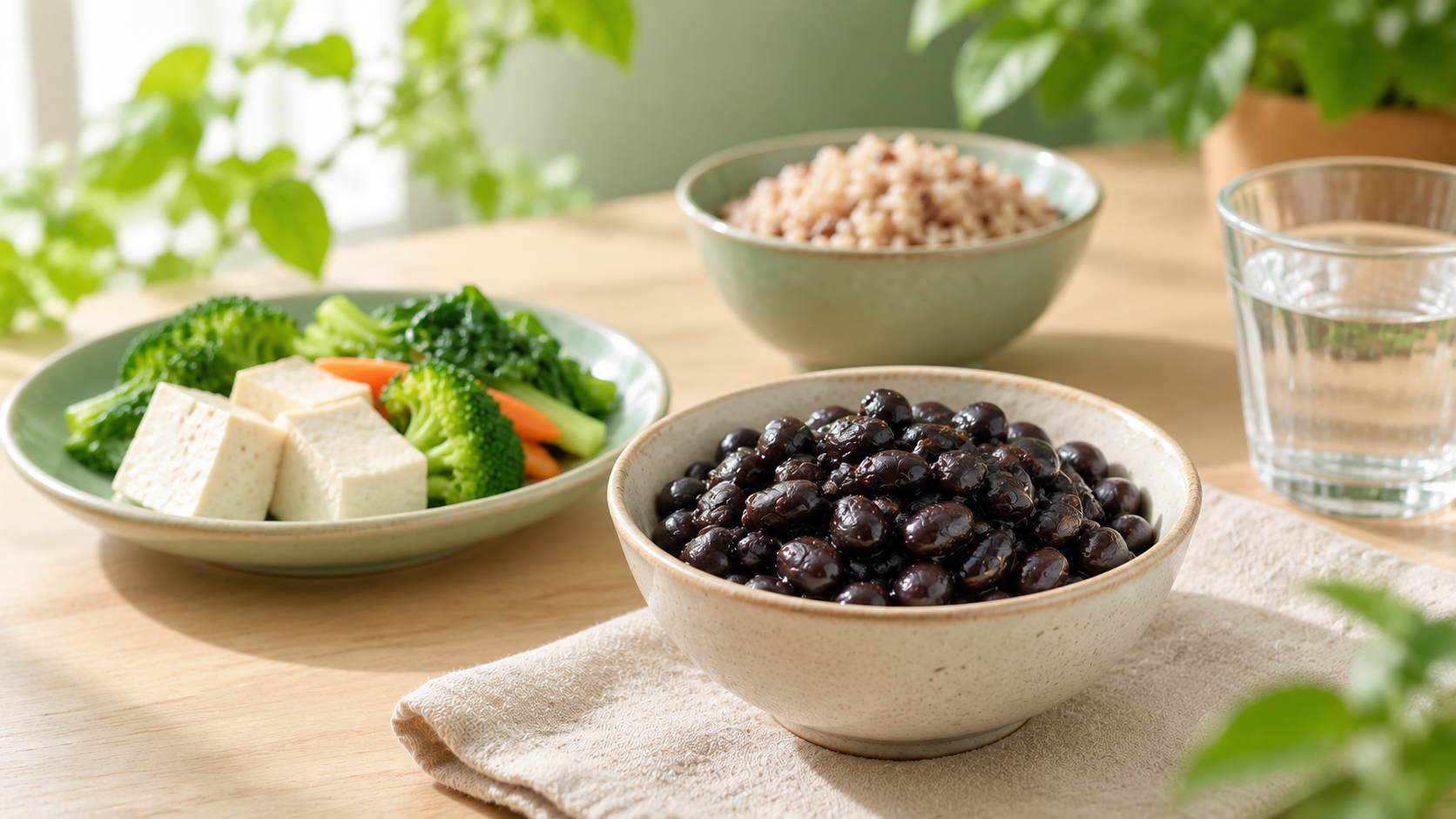
Dark foods do not dye hair from within
Hair color depends on melanin produced in hair follicles and is influenced by age, genetics and health, among other factors. A dark bean coat does not show that its pigments enter follicles and recolor gray hair. The traditional association between dark foods and “kidney nourishment” is also not clinical evidence that black soybeans improve kidney function or treat graying. Gray hair or poor sleep cannot establish a need to “nourish the kidneys” with black soybeans.
A balanced diet supports normal body functions, but this is different from demonstrating that a particular food reverses graying. Gradual graying with age is common and does not require labeling yourself as ill. Marked changes at a young age, persistent hair loss or other symptoms can be discussed with a dermatologist or primary care clinician, who can decide whether to assess nutritional deficiencies or other causes. Finding a treatable cause would still not prove that black soybeans restore hair color.
Was the sleep study testing a meal or an extract?
Proteins and plant compounds have roles in the body, but that does not mean eating more black soybeans makes people fall asleep faster. Cell and animal experiments can generate research questions; they cannot directly establish whether everyday black soybean milk improves insomnia. When a headline says research proves a sleep benefit, first ask what product was tested, who participated and what was measured.
For example, a randomized controlled trial assigned 64 healthy Japanese adults dissatisfied with their sleep to black soybean seed coat extract capsules or placebo for 12 weeks. It reported favorable changes in some sleep-related measures. It did not test ordinary cooked beans or soy milk and excluded people receiving treatment for insomnia or sleep disorders. Some authors worked for the relevant food company. These details limit how the findings can be applied: they do not provide a sleep-promoting dose of household beans or establish a treatment for chronic insomnia.
Also check whether results came from questionnaires or objective measurements, whether they concerned the whole sample or a subgroup, and whether other studies have reproduced them. Human research can be informative, but preliminary findings for a particular preparation are still some distance from everyday dietary advice. There is no need to buy concentrated powders or extracts, or combine supplements, simply to test a popular claim.
Read these details when buying black soybean products
- Ingredients. A black soybean drink may also contain sugar, other grains or oils. Its name cannot replace the ingredient list. Compare protein, energy and sodium on the same basis, such as per 100 grams or 100 milliliters, and then consider the portion you will actually consume.
- Preparation instructions. Raw bean flour and ingredients that require cooking differ from cooked products designed for instant preparation. Fine texture or a “natural” label does not mean that briefly adding hot water makes a product ready to eat.
- Promised effects. Claims about restoring hair color, repairing kidneys or inducing sleep require clinical evidence matching the product, intended users and specific outcome. An ordinary food does not acquire these effects simply because it contains soy or plant compounds.
Plain preparations with less added sugar and salt are generally easier to fit into daily meals. “Sugar-free” does not mean calorie-free or suitable for unlimited intake. Choose soy milk, tofu or cooked beans according to taste, convenience and digestive tolerance, without assuming that darker, more concentrated or more expensive products are better.
Get cooking and storage right at home
Prepare dried black soybeans according to the package and cooking appliance instructions, and cook them thoroughly even after soaking. Softening through soaking, briefly blanching or merely warming them to a comfortable eating temperature does not replace proper cooking. For homemade soy milk, use the appliance's specified cooking cycle. Blending, keeping warm or seeing foam on the surface is not reliable proof that heating is complete. If you are unsure, a cooked product with clear serving instructions may be more convenient.
Cooking does not make prolonged storage safe. Food safety authorities warn that some bacterial spores in soy milk can survive ordinary heating. Leaving it at room temperature for too long increases risk, and reheating may not remove heat-resistant toxins already produced. Make modest batches, clean containers and tools that touch cooked food, refrigerate soy milk promptly if it will not be consumed immediately, and follow the product or appliance storage instructions. Do not leave a pot in a warm kitchen overnight and rely on boiling it again to make it safe.
Distinguish digestive discomfort from allergy
Some people experience bloating, nausea or bowel changes after eating soy. Try a smaller portion and cooked products you tolerate. Consult a clinician if symptoms recur or are significant; discomfort is not evidence of “detoxification.” If a large bowl of beans or a substantial drink before bed causes digestive discomfort or nighttime bathroom trips, there is no reason to maintain it as a sleep ritual.
People with a known soy allergy should avoid black soybeans and relevant foods containing soy, checking ingredients and allergen information carefully. Thorough cooking does not guarantee protection from an allergic reaction. Stop eating and seek medical advice for symptoms such as a rash or swollen lips. Throat swelling, difficulty breathing or fainting requires immediate emergency help and following any existing allergy emergency plan. Do not try a small amount on your own to check whether tolerance has returned.
Bring a record of poor sleep to your clinician
Instead of repeatedly changing “sleep-promoting recipes,” record bedtimes and wake times, nighttime wakefulness, daytime sleepiness, caffeine, alcohol and evening meals. This can help identify concerns and explain them at an appointment. Keeping wake times reasonably consistent, avoiding large late meals, and limiting caffeine and large drinks close to bedtime address everyday factors more directly than forcing an extra snack.
Seek assessment if recurring difficulty falling asleep, repeated awakenings or early waking affects daytime work, mood or safety. Cognitive behavioral therapy for insomnia (CBT-I) is usually the first treatment considered for chronic insomnia; dietary changes or sleep hygiene advice alone may not be enough. Enjoy black soybeans as part of ordinary meals if you like them. Decisions about graying-related concerns or insomnia should follow the particular problem and the evidence relevant to it.
Health information noticeThis article provides general health education and does not replace professional diagnosis, treatment or personalized advice about medicines. Do not start, stop or change medicines or treatment based solely on this article. Seek medical care for persistent symptoms and urgent help for emergency warning signs. Images are AI-generated illustrations, not real patient photographs, clinical test results or evidence of treatment outcomes.
Copyright and rights concernsIf you believe any text or image in this article infringes your rights, please contact this website at we@worldsleep.com and provide the article link, a description of the concern and supporting rights documentation. We will review the information and respond promptly.