Fresh longan contains more water, while drying concentrates sugar and energy. Equal handfuls or fixed fruit counts are not interchangeable portions. Learn how to read labels, plan portions and sweet soups, and assess claims about sleep, qi and blood, and anemia, with practical guidance on glucose management, children’s swallowing safety, and possible allergy.
Longan has a sweet flavor and can be eaten as fresh fruit or added to porridge and sweet soups. To use it sensibly, first distinguish fresh longan from the dried product. Also separate enjoying a food from expecting it to treat insomnia, “replenish qi and blood,” or cure anemia. Longan can add variety to a diet, but poor sleep, persistent tiredness, or unusual paleness need attention to their underlying causes.
Fresh and dried longan differ first in their water content
Fresh longan, sometimes called fresh guiyuan in Chinese, has translucent, water-rich flesh beneath its shell and a hard seed inside. Dried longan is the dehydrated product. It may be sold with its shell and seed or as shelled, pitted dried flesh. Check which form you are buying: the terms “longan,” “guiyuan,” and “longan flesh” do not necessarily describe foods with the same moisture content.
Drying removes water and shrinks the flesh. Compared by the same edible weight, dried fruit generally has more concentrated sugar and energy. Drying does not create sugar out of nothing; it reduces the amount of water in that weight. A small handful of dried longan therefore cannot be treated as interchangeable with the same handful of fresh fruit. Variety, ripeness, and processing also affect composition, so a single sugar-concentration ratio should not be claimed without checking the relevant product data.
Plain dried longan contains the fruit’s own sugar: “no added sugar” does not mean “sugar-free.” Candied products, longan syrup, and ready-to-drink sweet soups may contain additional sugar. Read the ingredients, nutrition information, and serving weight instead of relying on claims such as “natural” or “nourishing.”
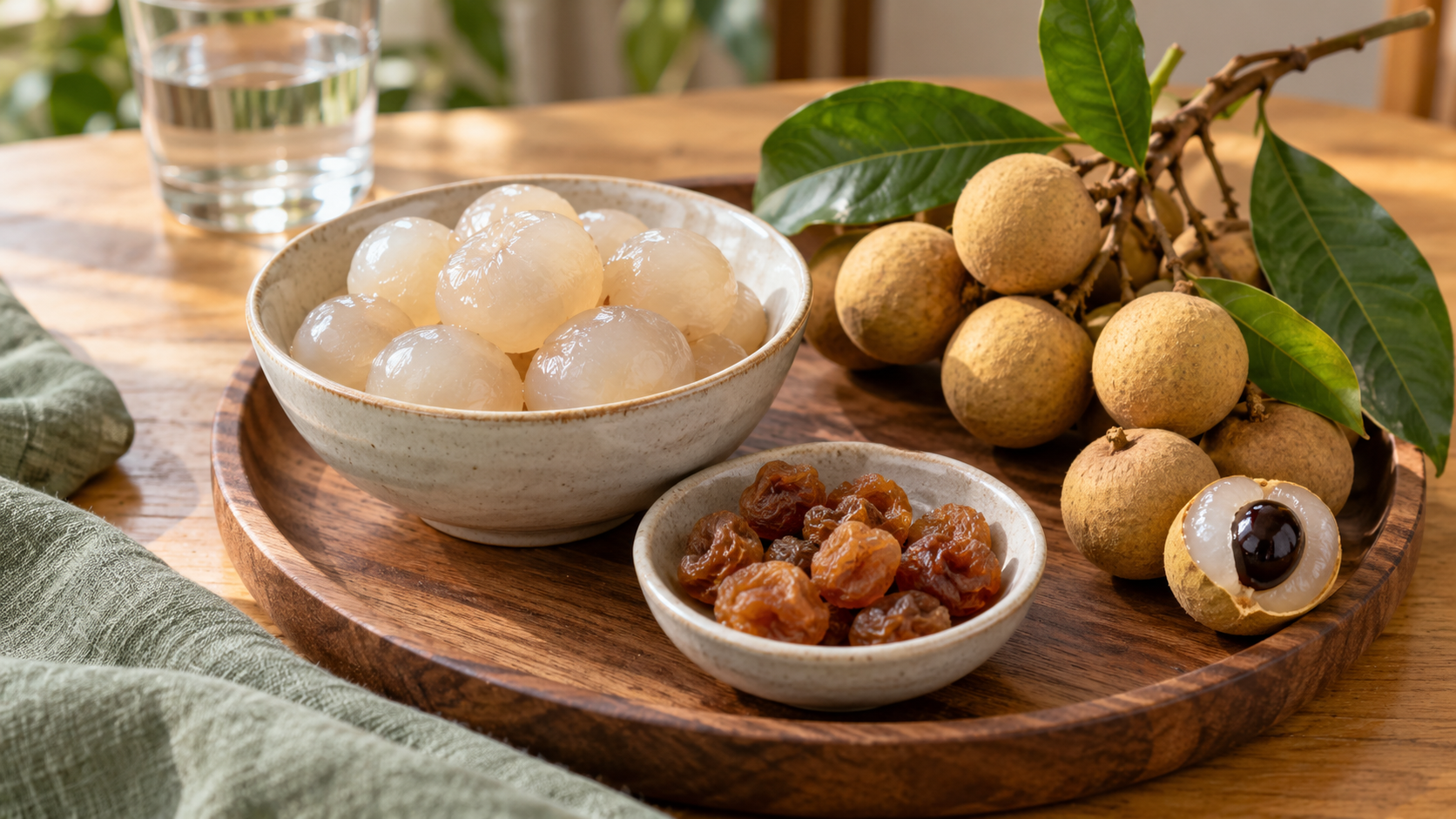
Set out a portion instead of relying on a fruit count
As a way to understand portions, UK public dietary guidance counts about 80 grams of fresh fruit or about 30 grams of dried fruit as one adult fruit portion. These are general food-portion examples, not treatment doses for longan or amounts everyone must eat each day. The 30 grams refers to the weight of dried fruit, not the weight of sugar. Counting both as one fruit portion does not mean they contain identical amounts of sugar.
Longan varies in size and may be weighed with or without its seed, so a fixed recommendation to eat a certain number each day can be misleading. A kitchen scale can help you recognize the edible weight after removing shells and seeds; then put a portion into a small bowl that fits your eating plan. When making a family pot of porridge or soup, consider how much dried fruit went into the entire pot, how many servings it makes, and how much you actually eat. The ingredients for a whole pot are not one person’s portion.
- Wash fresh fruit before removing shells and seeds. Set out the amount you plan to eat and put the remainder away.
- When using dried longan for flavor, begin with a small amount and taste before adding more. There is usually no need to add rock sugar, honey, or syrup as well.
- Soaking or simmering makes dried fruit absorb water and expand; it does not mean that the sugar in the original portion has disappeared. Some sugar can enter the liquid, so drinking only the broth does not guarantee a sugar-free drink.
- Enjoy dried fruit with a meal and reduce repeated nibbling on sticky, sweet dried fruit between meals to help protect teeth. A bowl of sweet soup should not replace a complete meal.
For blood glucose management, consider the whole meal
Having diabetes does not automatically mean avoiding all fruit, but portions should fit your individual eating plan. Dried longan is compact and easy to keep eating. The rice in longan porridge, other dried fruits in a sweet soup, and any added sugar also need to be considered. A longan product labeled “no added sugar” is not a food to eat without limits.
If your clinician or dietitian has given you a carbohydrate plan, fit fruit into that plan and monitor glucose as already advised. If readings repeatedly remain outside your agreed targets or you are unsure about food substitutions, bring the packaging and a record of what you eat to a professional. That is more useful than copying someone else’s “health-food portion.”
A small sleep study does not establish a food remedy
Human research on longan and sleep does exist. One randomized trial enrolled 54 volunteers with mild to moderate insomnia and assigned them to four groups comparing different longan syrups with a brown syrup over four weeks. The abstract reported improvements in sleep scores within some longan-syrup groups, but the comparison between groups did not show a statistically significant difference.
Feeling better than before does not, by itself, establish that longan caused the improvement, particularly when a clear difference from the comparison group was not demonstrated. The trial was small and short, and its products differed from fresh longan and ordinary dried longan. It cannot establish that eating longan before bed treats insomnia, or justify a medicinal-food dose for children, pregnant people, or those with long-term insomnia. Feeling comfortable after a warm drink is also not evidence that an ingredient has a sleep-inducing therapeutic effect.
Paleness or tiredness alone cannot diagnose anemia
The everyday expression “replenishing qi and blood” is not a test for anemia. Tiredness, dizziness, paleness, or cold hands and feet can occur with anemia but can also have other causes. Appearance, sensations, or changes after eating longan cannot confirm a diagnosis. A food containing a nutrient is not, in itself, proof that it treats a disease.
Seek assessment for recurring marked fatigue, dizziness, palpitations, breathlessness with activity, or heavy menstrual bleeding. Depending on the circumstances, a clinician may consider a complete blood count, ferritin, or other tests. Anemia can involve blood loss, nutritional deficiencies, absorption problems, or other diseases. It should not automatically be assumed to mean iron deficiency, and longan cannot replace identifying and treating the cause.
Keep everyday meals varied and include appropriate foods such as meat, beans, or fortified cereals. If iron-deficiency anemia has been diagnosed, follow clinical advice to address both the deficiency and its cause. Do not replace prescribed iron with longan and red-date soup. Chest pain, severe breathlessness, fainting, or significant bleeding warrant urgent medical attention.
Address children’s swallowing safety and possible allergy
For children, the important factors are food shape, texture, and chewing and swallowing ability. Whole seeded longan, slippery round flesh, and sticky or chewy dried fruit need careful preparation. Before offering longan to a young child, remove every shell and seed and prepare the flesh in a size and texture appropriate for their development. Dried fruit needs thorough softening and fine chopping; soaking alone does not guarantee safety. Children should sit upright, eat calmly, and be supervised throughout, without running around while eating.
These precautions apply general choking-prevention principles. They do not establish that longan has a unique toxicity in children, and adult fruit portions should not simply be applied to toddlers. Anyone with swallowing difficulties should follow professional advice about food texture.
Do not dismiss an itchy mouth, hives, or swollen lips after eating as simply “internal heat.” Stop eating the suspected food and seek assessment for a possible allergy. Difficulty breathing, swelling of the tongue or throat, or fainting requires emergency help. These are general food-allergy recognition principles: they do not establish that longan is a common allergen, and a dry mouth or bloating alone does not diagnose allergy.
Put the focus back on assessing poor sleep
If you want longan in the evening, fit it into your diet as an ordinary food. There is no need to add an extra meal or force yourself to drink sweet soup for sleep. Large amounts of fluid near bedtime may increase nighttime bathroom visits, and try to avoid very late dinners. A consistent wake-up time, avoiding caffeine and alcohol close to bed, regular daytime activity, and a quiet, dark, comfortable bedroom have a better basis than pursuing a particular food combination.
Seek medical assessment if difficulty falling or staying asleep affects daytime life, or if you snore and wake gasping. Cognitive behavioral therapy for insomnia (CBT-I) is usually a first treatment option for long-term insomnia; lifestyle changes are only one part of care. Recording sleep, food intake, and daytime functioning can help that discussion. Do not keep increasing longan portions to test its supposed benefits or delay seeking care.
Health information noticeThis article provides general health education and does not replace professional diagnosis, treatment or personalized advice about medicines. Do not start, stop or change medicines or treatment based solely on this article. Seek medical care for persistent symptoms and urgent help for emergency warning signs. Images are AI-generated illustrations, not real patient photographs, clinical test results or evidence of treatment outcomes.
Copyright and rights concernsIf you believe any text or image in this article infringes your rights, please contact this website at we@worldsleep.com and provide the article link, a description of the concern and supporting rights documentation. We will review the information and respond promptly.