Poor sleep is not a reason to rush into cooling teas, “bitter and cold” remedies or special sleep foods. Review drink ingredients, everyday meals and meal timing, distinguish ordinary foods from concentrated herbs and supplements, and adapt choices to your symptoms without unnecessary restrictions or alcohol as a sleep aid.
Drinking “heat-clearing” soup or herbal tea, or replacing dinner with a bowl of “calming” congee, is a familiar response to poor sleep for some people. Everyday food can provide nourishment and help you feel comfortable after eating, but a product's name does not make it an insomnia treatment. This article is for adults who want to improve their eating habits. It focuses on practical food, drink and product choices, rather than assigning yourself a traditional body constitution after a poor night's sleep.
Poor sleep is not a reason to prescribe yourself “bitter and cold” remedies
“Internal heat” and “bitter and cold” are concepts used in traditional Chinese medicine. Trouble falling asleep or a dry mouth alone cannot tell you which medicinal herb you need. A bitter taste in the mouth or feeling irritable does not establish that a particular soup is an appropriate treatment, either. If you want traditional Chinese medicine treatment, seek assessment from a qualified health professional. Do not combine, concentrate or take multiple herbs long term based on an online recipe.
Ordinary foods need not all be treated as medicines. Bitter melon, mung beans and vegetables can be part of everyday meals; a bitter taste does not establish a sleep benefit. Nor should everyone with poor sleep be told to avoid foods described as “cooling.” Consider your own tolerance, allergies and overall diet. A meal containing an ordinary ingredient, a concentrated extract and a multi-ingredient medicinal product cannot be assumed to have the same safety or effects.
Check the ingredients of “cooling” and “sleep” teas
Commercial cooling drinks, herbal infusions and tea drinks vary widely. “Natural” or “sugar-free” does not tell you whether a drink is suitable in the evening. Read the ingredients first: tea leaves, tea extracts or other caffeine sources may make you more alert. Sugar-free does not mean caffeine-free. Review coffee, tea, cola and energy drinks together. If caffeine affects you in the afternoon or evening, try having it earlier and choosing plain water instead. Everyone does not need the same cutoff time.
Herbal ingredients can also carry specific risks. Licorice-containing products, particularly when consumed in large amounts or over a long period, can cause serious adverse effects. People with high blood pressure, heart disease or kidney disease need particular caution. This does not mean every cooling drink carries the same risk. If you take medicines, are pregnant or are breastfeeding, show a doctor or pharmacist the ingredients before choosing a product containing medicinal herbs. Choose sugary drinks less often, rather than adding sweet drinks in the name of dietary treatment.
A light diet still needs more than soup and congee
Eating only plain congee, greens or soup for several days to “clear heat” can make meals unnecessarily limited. Most adults can keep a starchy staple and include vegetables and protein foods such as eggs, tofu, fish or lean meat. Where practical, replace some staples with wholegrain options you tolerate and enjoy. Using less oil and salt does not mean eliminating fat, and expensive ingredients are not needed to “make up for” lost sleep.
Build dinner around your appetite and tolerance. Everyday options include:
- Rice or mixed-grain rice with tofu, cooked vegetables and a small serving of light soup.
- A bowl of noodles with egg or tofu and vegetables, moderately seasoned, without treating a large bowl of broth as an extra requirement.
- Congee served with egg, tofu or other soy foods, and vegetables, rather than thin rice porridge alone.
These are meal examples, not sleep prescriptions. Aim for balance across the day; every meal does not need fixed proportions. People with diabetes, kidney disease or other dietary restrictions should adapt meals to their existing individualized plan.
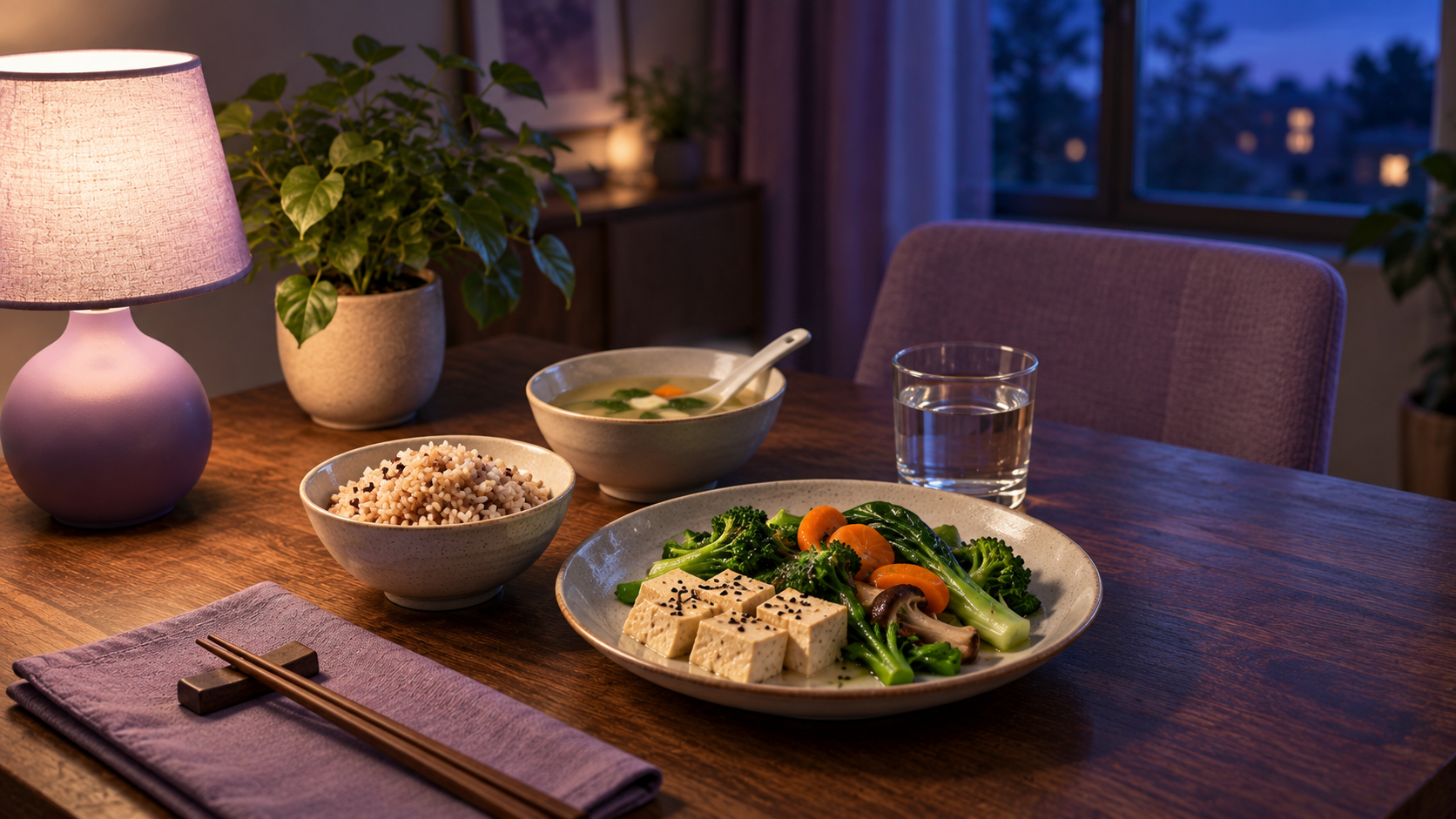
Avoid large meals near bedtime and tailor restrictions to symptoms
Keep dinner reasonably regular, rather than saving most of the day's food for just before bed. Do not deliberately go hungry to “clear heat,” either. If you are genuinely hungry before bed, a small food you tolerate, such as a little plain yogurt or wholegrain bread, is an option. You do not need to endure hunger or add a full late-night meal.
If you have reflux symptoms at night or when lying down, try finishing meals at least three hours before lying down or going to bed. This advice is for reflux, rather than a compulsory mealtime for everyone. Spicy, high-fat or acidic foods may trigger symptoms in some people. Note which foods actually bring on your heartburn or regurgitation, then make targeted adjustments. There is no need for a universal forbidden-food list for poor sleepers.
Enjoy milk, soup or congee without promising a cure
Warm milk, vegetable soup or congee can be a familiar habit, a source of nourishment or part of winding down. Feeling comforted by a drink does not establish that it treats insomnia. The presence of a nutrient in a food does not show that one cup or bowl will improve sleep, and it cannot justify a promise of sleeping through the night.
If you enjoy these foods, include a modest amount; if you do not, there is no need to force them. If milk or another food makes you uncomfortable, choose an alternative you already tolerate. If drinking soup or other fluids just before bed is regularly followed by bathroom trips, have soup with dinner and spread fluid intake through the day. Do not force down a large drink for sleep, or deliberately drink too little all day. Follow your existing plan if a clinician has advised you to restrict fluids.
Alcohol and supplements cannot make up for a remedy that disappoints
Alcohol may make you feel sleepy initially, yet leave you sleeping worse later in the night. Red wine and medicinal herbal wines are not sleep treatments. If you increasingly rely on alcohol to fall asleep, tell a doctor rather than increasing the amount or switching drinks.
Assess supplements individually. Research on magnesium for insomnia is limited and inconsistent; poor sleep alone does not establish magnesium deficiency. Herbal sleep products differ in their effects and safety. Melatonin may have a role in certain problems involving the body clock, but it is not a universal answer to insomnia, and its long-term safety remains uncertain.
Do not combine a “calming tea” with several other sleep products on your own. Before using a product, give a doctor or pharmacist its full ingredients, your current medicines and existing health conditions so they can assess whether it is appropriate. If you are already receiving insomnia treatment, do not stop prescribed medicines because you have switched to soup or tea.
Start with one dietary change you can observe
Choose the change most relevant to you: replace strong afternoon tea with water, move a very late large meal earlier, or turn a congee-only dinner into a more varied meal. Briefly note the timing and approximate amounts of food and drink, stomach discomfort, how falling asleep felt and your daytime energy. Avoid changing many products at once. Notes may help identify personal patterns; one good night's sleep does not prove that an ingredient has a treatment effect.
Continue allowing enough time for sleep and keeping a regular routine. If poor sleep recurs and affects daytime life, or comes with loud snoring and waking up gasping, seek medical assessment instead of cycling through more “heat-clearing” recipes. For persistent insomnia, ask about evidence-based options such as cognitive behavioral therapy for insomnia (CBT-I), while keeping food in its everyday supporting role.
Health information noticeThis article provides general health education and does not replace professional diagnosis, treatment or personalized advice about medicines. Do not start, stop or change medicines or treatment based solely on this article. Seek medical care for persistent symptoms and urgent help for emergency warning signs. Images are AI-generated illustrations, not real patient photographs, clinical test results or evidence of treatment outcomes.
Copyright and rights concernsIf you believe any text or image in this article infringes your rights, please contact this website at we@worldsleep.com and provide the article link, a description of the concern and supporting rights documentation. We will review the information and respond promptly.