When you get home late or work shifts, plan meals around both your main sleep period and the challenges of eating at night. Preparing food ahead, portioning it and using work breaks for meals can help avoid saving most of the day’s food for bedtime. Adjust timing to the shift, hunger and health needs instead of following a universal food cutoff.
When you get home late from overtime or need to sleep soon after a night shift, dinner can be difficult to arrange. Work leaves little time to eat, and the meal at home becomes an attempt to make up for everything missed during the day. For adults in these situations, a useful goal is to coordinate food, work and the main sleep period, reducing large meals just before sleep. Searching for a special sleep-promoting food, or routinely eating too little to get to bed sooner, does not solve the scheduling problem.
Identify your main sleep period before planning meals
Start with when you expect your next longest stretch of sleep to begin, then work backward through commuting, washing and opportunities to sit down for a meal. For night workers, that sleep may take place during the day. How close a meal falls to sleep matters more than whether it is called dinner. General sleep guidance advises avoiding heavy or large meals within a few hours of bedtime. That does not establish a single evening food cutoff for everyone.
There is another consideration: the body's circadian rhythms do not necessarily reverse as soon as the work schedule changes. A meal being far from sleep does not mean that a large meal in the early hours is without consequences. Try to avoid both concentrating large amounts of food in the biological night and eating most of the day's food immediately before the main sleep period. The details depend on the shift, physical demands and individual health needs.
On days you return late, eat part of dinner earlier
If you work during the day and sleep at night but often stay late, first look for an opportunity to eat around your usual dinner time. You might bring a meal and eat before overtime starts or during an available break. Avoid routinely stretching the entire interval after lunch until you get home, only to order much more takeout than you need because you are extremely hungry.
If eating in two stages is the only practical option, divide the dinner you already planned into separate containers. Eat the more substantial part earlier, then decide whether to eat the rest at home according to hunger. This redistributes food you need; it does not mean adding another full meal after you have eaten enough. If the whole meal really must be late, serve a manageable portion, eat slowly and store leftovers promptly. Improve meal preparation and breaks the next day without becoming anxious about an occasional late dinner.
For example, if you expect to sleep soon after work, prepare rice, tofu or fish, and cooked vegetables ahead of time. Use a work break for the main meal so you do not have to cook a whole spread on arriving home. This is an example of a practical combination, not a menu with special sleep benefits.
For night and rotating shifts, find repeatable opportunities to eat
When the rota changes, write down the periods after waking, before work, during breaks and between finishing work and sleep. Identify where meals can reliably fit into each shift pattern. Where feasible, place more substantial meals in available daytime periods or before work, and reserve smaller portions for overnight work as needed. Avoid going through the entire shift without food and making up for it all afterward. If the period before work is itself late at night, the amount eaten at night still matters; the label “before work” is not sufficient guidance.
Some research on night-shift meal timing comes from short laboratory simulations and examines blood glucose and circadian rhythms. It does not directly establish that a particular meal schedule improves insomnia or prevents long-term disease in actual shift workers. A daytime eating schedule used in an experiment should therefore not become a rule that everyone must fast all night. Physically demanding work, unpredictable breaks and medicines that must be taken with food make it especially important to start with a workable plan that provides enough food.
Portion food first and choose a manageable meal
A practical starting point for meal preparation is a staple food, a protein food and vegetables: for example, rice or other grains, eggs or tofu, and cooked vegetables. Choose combinations you tolerate well and can carry and reheat easily. Food need not be bland, and there is no need to live on soup, eat only fruit or remove staple carbohydrates altogether. Warm soup can be part of a meal, but soup, milk or an individual nutrient cannot guarantee deep sleep.
No single number of bowls, weight in grams or percentage of daily calories suits everyone's dinner. Start with a portion that usually leaves you comfortable, and pause after eating to assess whether you are still hungry. If you regularly feel uncomfortably full, reduce the meal nearest sleep next time and move that food to an earlier opportunity. If you repeatedly go to bed hungry, check whether you have eaten enough during the day and at work. The aim is to distribute daily intake sensibly, rather than keep reducing the total.
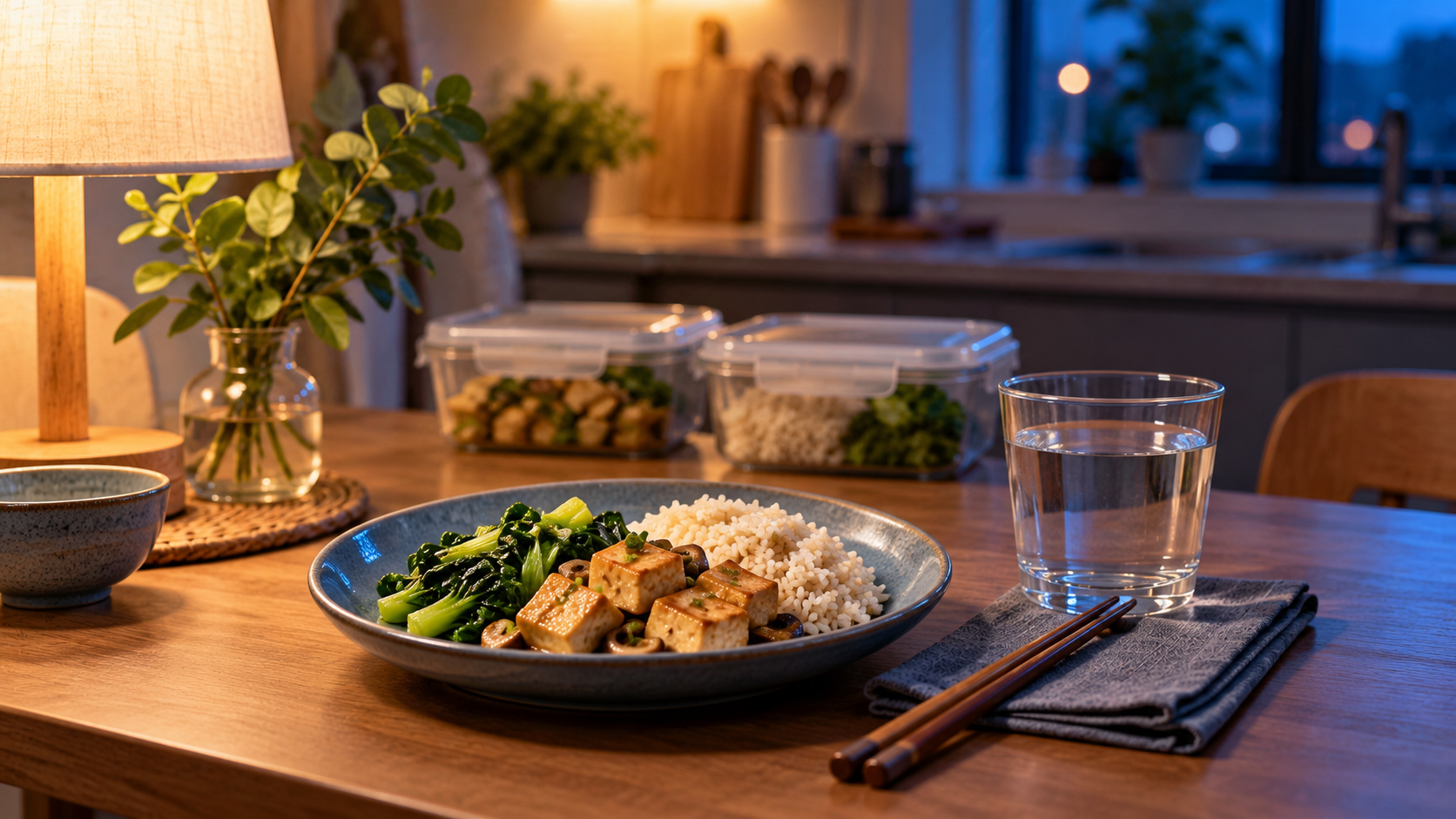
Plan storage and reheating along with meal preparation
Check whether your workplace has a refrigerator, usable reheating equipment and an actual meal break before deciding what and how much to bring. When making several portions, divide food into shallow containers and refrigerate or freeze promptly. Do not leave a whole pot at room temperature until it has completely cooled, or keep a lunch box in an ordinary bag throughout a shift. Maintain appropriate refrigeration during transport and while food waits to be eaten. If that is not possible, choose food that can be stored safely or a reliably prepared fresh meal.
Reheat cooked leftovers thoroughly. Microwaves can leave cold spots, so turn or stir food as directed for the equipment and use a food thermometer to check that the center reaches about 74°C (165°F). Heating only the portion you intend to eat can reduce repeated handling and make unplanned overeating less likely. The convenience of meal preparation depends on advance planning and safe food handling.
Arrange drinks and the time after meals around sleep too
Coffee, strong tea and energy drinks also need planning. If you use caffeine on night shifts, keep it toward the earlier part of the shift and consider both the time until your main sleep period and your own sensitivity. Finishing work at dawn does not make it an ordinary morning for another coffee. Alcohol is not an appropriate way to help yourself sleep after work. Spread water intake across waking and working hours rather than trying to catch up with large amounts of soup or other fluids just before bed.
Allow a calm period to wind down after eating and avoid lying down immediately. If reflux occurs at night or while lying down, discuss finishing meals earlier and allowing a longer interval with your clinician, while identifying your own food triggers. This does not require everyone to ban all spicy or acidic foods. Avoid repeatedly sacrificing already limited sleep to achieve a supposedly perfect meal-to-bed interval; work on finding earlier opportunities to eat.
Use a record of your own shifts to assess the plan
Over several similar shifts, record meal times, approximate portions, hunger or fullness before bed, caffeine intake and your main sleep period. Change one practical element first and compare how you feel. A record may reveal a problem, but it cannot prove that a particular food caused or cured insomnia.
If you have diabetes, a risk of low blood glucose or medicines that need to be taken with food, coordinate meals, monitoring and medication with your clinician or a nutrition professional before changing your meal pattern. Do not stop medication yourself or force yourself to fast. Seek medical assessment if difficulty falling asleep, disrupted sleep or sleepiness at work continues to affect daily life or safety; frequent reflux also warrants advice. Preparing food ahead, spreading intake across available meals and protecting enough time for the main sleep period are more workable goals than a “perfect dinner.”
Health information noticeThis article provides general health education and does not replace professional diagnosis, treatment or personalized advice about medicines. Do not start, stop or change medicines or treatment based solely on this article. Seek medical care for persistent symptoms and urgent help for emergency warning signs. Images are AI-generated illustrations, not real patient photographs, clinical test results or evidence of treatment outcomes.
Copyright and rights concernsIf you believe any text or image in this article infringes your rights, please contact this website at we@worldsleep.com and provide the article link, a description of the concern and supporting rights documentation. We will review the information and respond promptly.