Cold feet do not have to be soaked. Diabetes-related nerve damage, reduced blood supply and broken skin change the risks of warm-water exposure, and a lack of pain or numbness does not establish safety. Learn the difference between washing and soaking, daily foot checks, other ways to keep warm and signs that need medical attention. Temporary warmth is not treatment for insomnia or circulation problems.
Cold feet at bedtime in autumn or winter can make a basin of hot water tempting. For someone with healthy feet, warmth may feel pleasant. But before deciding whether to soak, consider sensation, skin condition and blood supply. With diabetes, neuropathy or an existing foot injury, making the water hotter or soaking until you sweat can turn a minor problem into a wound. Keeping warm does not have to involve soaking or taking that risk.
Feeling warmer does not mean insomnia has been treated
Feeling relaxed after a foot soak is a personal experience of comfort. It does not establish that soaking treats insomnia, opens blocked arteries or removes an underlying condition described as “cold” or “dampness.” In a crossover trial completed by 25 middle-aged and older adults, a footbath raised foot temperature, but objective sleep recordings and self-rated sleep quality did not change significantly compared with nights without a footbath. Such a small, short study cannot establish a treatment for chronic insomnia or confirm the safety of soaking high-risk feet.
A 2025 review found possible improvements in older adults' perceived sleep, but evidence certainty was low to very low and objective sleep measures did not clearly improve. This does not establish treatment for chronic insomnia or the safety of soaking high-risk feet.
People who enjoy the routine and have no relevant risk factors may regard it as an optional way to relax. Even if it helps you settle down, you do not need to make it a requirement for falling asleep. If you feel compelled to use increasingly hot water or soak longer, reconsider the habit.
With diabetes, reduced sensation is a key concern
Diabetes-related nerve damage can reduce the ability to feel heat, cold and pain. Some people experience numbness or tingling; others have no obvious symptoms. “It did not feel hot” and “It never hurt” are therefore unreliable assurances of safety. Diabetes can also reduce blood flow to the feet, making wounds or infections harder to heal. An unnoticed blister or burn deserves attention.
Routine advice for people with diabetes is to wash their feet in warm, not hot, water, dry them carefully and avoid soaking. Follow your individual foot-care plan, especially if you have reduced sensation, a history of foot ulcers or circulation problems. A relative testing the water or a thermometer checking it cannot make soaking appropriate for a foot that should not be immersed. Recurrent numbness or difficulty distinguishing hot from cold also warrants assessment in someone without diagnosed diabetes.
After taking off your shoes each day, examine the tops, soles, heels and spaces between the toes for red spots, breaks in the skin, blisters and color changes. Use a mirror or ask for help if you cannot see the soles. Do not test your nerves with needles or hot water. A clinician's assessment of sensation and blood flow is more reliable than guesswork.
Cold feet with pain or skin damage need an explanation
Feet becoming cool in cold weather does not automatically mean vascular disease. However, recurrent calf pain on walking that eases with rest, a foot wound that fails to heal, or skin becoming pale or blue should be assessed promptly. Peripheral arterial disease restricts blood supply. A feeling of local warmth does not mean that restriction has been treated. People with known inadequate arterial blood flow should not try to manage cold feet by soaking them in hot water.
If there is broken skin, an ulcer, drainage, a blister, active dermatitis or raw skin between the toes, address the skin problem first. Do not soak to “disinfect” it or scrub away softened skin. Varicose veins, leg swelling and inadequate arterial supply are different problems and cannot be covered by one blanket rule about foot soaks. Persistent swelling or ongoing vascular or wound treatment calls for advice from the team providing that care.
Even without these risks, hotter and longer are not goals
Only consider a footbath for personal comfort when skin is intact, sensation is normal and there is no known problem with foot blood supply. This still does not guarantee safety. No single temperature and number of minutes suits everyone; research protocols and device advertisements should not become universal instructions. Routine washing usually meets cleaning needs.
- Examine your feet first. Have a clean container, a dry towel and a stable seat ready. Keep the floor dry and avoid walking while carrying hot water.
- Use warm rather than hot water, mixed before contact. A thermometer can help check it but cannot replace assessment of risk. Do not rely solely on foot sensation or top up with hot water while your feet are in the basin.
- Do not aim for redness or sweating, or tolerate a burning sensation. Stop immediately for stinging, burning, itching or dizziness. Blisters, broken skin or persistent redness or swelling need assessment as a possible injury.
- There is no need to add ginger, mugwort, salt or essential oils for a supposed therapeutic effect. Do not treat additives as remedies for insomnia, infection or vascular problems. Gentle, fragrance-free care products are preferable for dry, sensitive skin.
Care after washing matters more than repeated soaking
Pat the feet dry gently, taking particular care to absorb moisture between the toes rather than rubbing hard. Apply a suitable moisturizing cream or ointment to intact dry skin on the tops, soles or heels, while keeping the toe spaces free of greasy moisture. Moisturizing supports the skin barrier; it does not mean putting ordinary skin care products into an open wound. Persistent cracking, scaling, itching or stinging after application warrants advice about the cause and appropriate products.
People with diabetes should not cut away calluses, pierce blisters or use chemical corn removers themselves. Seek professional foot care if vision, reach or sensation makes self-care difficult. Following your recommended blood glucose management and foot appointments matters more than finding a stronger soaking mixture.
Try ways to keep warm without applying direct heat
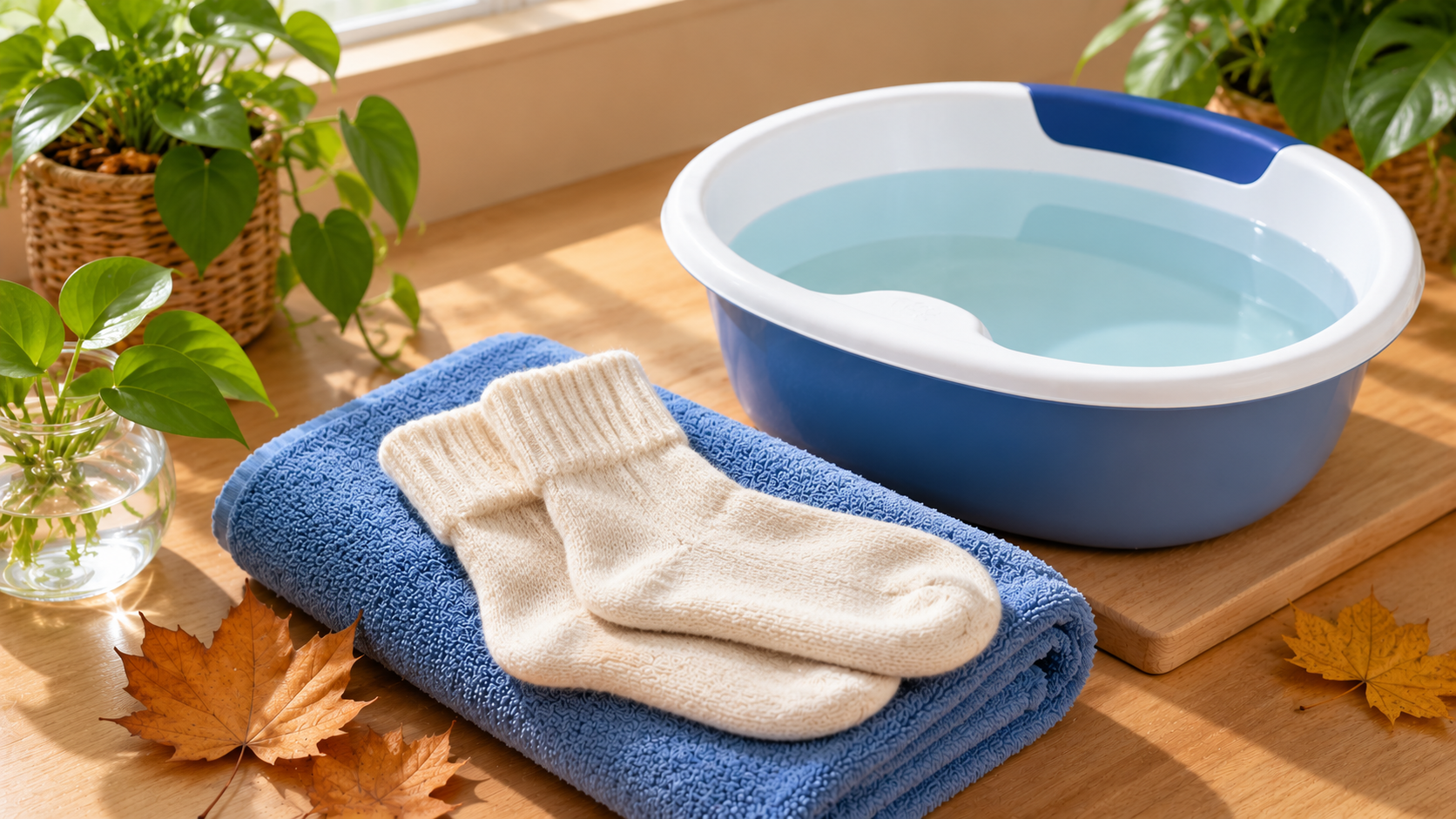
Before bed, make sure your feet and socks are dry. Choose soft, well-fitting socks with cuffs that do not constrict, along with suitable bedding, and change damp socks promptly. People with diabetes can also wear socks for cold feet in bed. When getting up to walk, still use suitable protective shoes or slippers to avoid stepping barefoot on something sharp. Check shoes for foreign objects and rough linings before putting them on.
Do not place hot water bottles, heating pads or heaters against feet with reduced sensation, especially while sleeping. A layer of fabric is no guarantee against burns. Arrange an assessment if your feet remain persistently very cold in a warm environment, or one foot differs from the other in temperature or color, rather than adding more heat sources.
Do not wait until after a soak to act on these changes
For someone with diabetes, a new blister, wound, marked redness, swelling, warmth, drainage or a change in foot color or temperature deserves prompt contact with a clinician, even without pain. Do not wait for the next routine appointment. If one foot suddenly becomes distinctly cold, pale or blue with new severe pain, numbness or weakness, seek emergency help immediately. Blackened skin, a foul smell or a rapidly worsening wound also needs urgent assessment. Do not continue heating, soaking or massaging in an attempt to restore circulation.
Address foot safety and sleep problems separately
Comfortably warm feet can be part of getting ready for bed. But persistent insomnia that affects daytime functioning and daily life needs assessment in its own right. Chronic insomnia has evidence-based treatments, including cognitive behavioral therapy for insomnia (CBT-I) provided by a trained professional. Sleep hygiene advice or a basin of warm water alone is not enough. Keep a relaxation habit that suits you, or skip foot soaking altogether. The aim is to rest safely, not to complete a compulsory nightly “sleep treatment.”
Health information noticeThis article provides general health education and does not replace professional diagnosis, treatment or personalized advice about medicines. Do not start, stop or change medicines or treatment based solely on this article. Seek medical care for persistent symptoms and urgent help for emergency warning signs. Images are AI-generated illustrations, not real patient photographs, clinical test results or evidence of treatment outcomes.
Copyright and rights concernsIf you believe any text or image in this article infringes your rights, please contact this website at we@worldsleep.com and provide the article link, a description of the concern and supporting rights documentation. We will review the information and respond promptly.