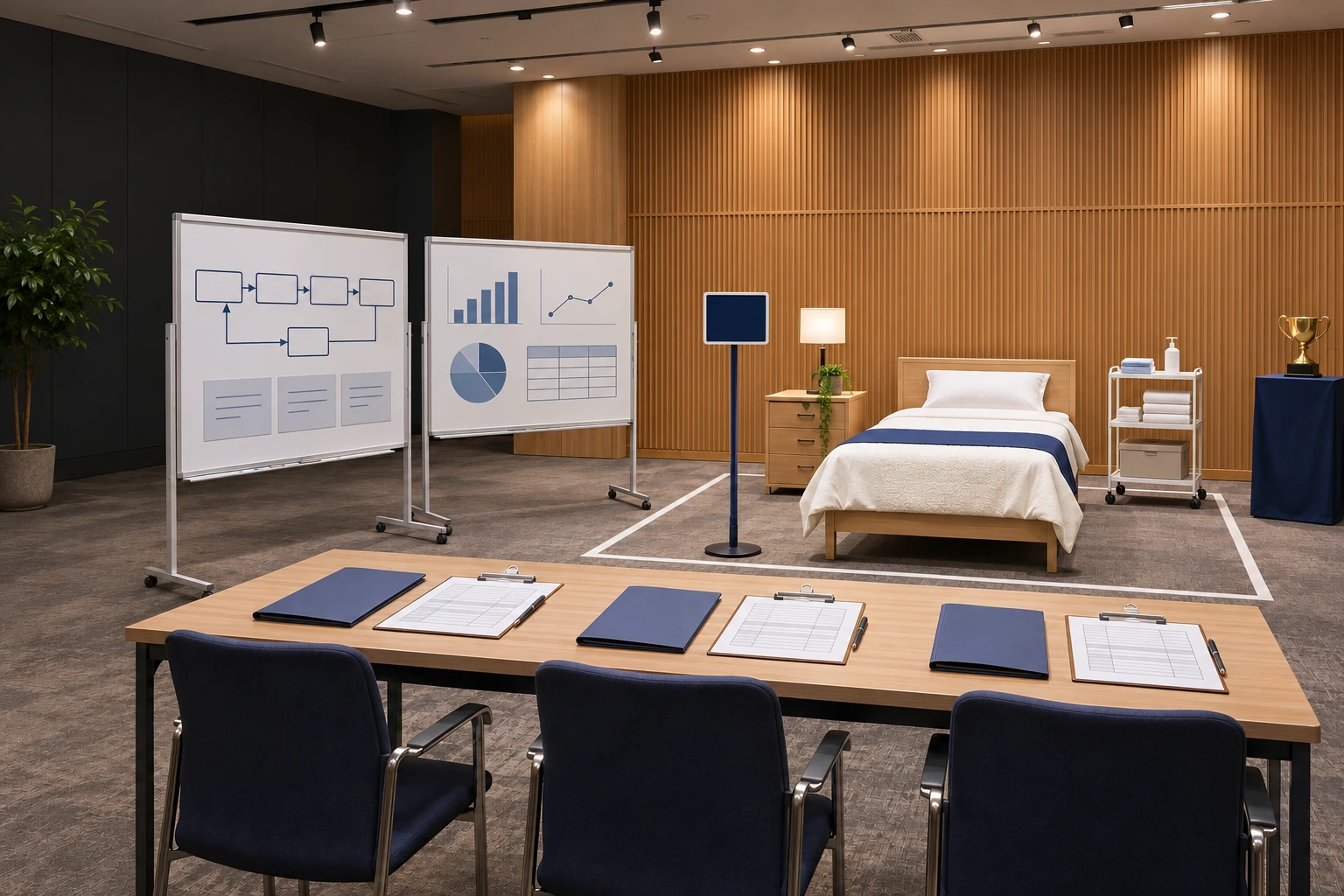
For practitioners in sleep services, product applications, environments and education. Present your understanding of needs, delivery process and ability to reflect through demonstrations, cases and scenario proposals.
sleepist Cup focuses on professional capability in real work: whom you serve, the question you address, why you chose an approach, how you delivered it and what you learned from the feedback.
PROFESSIONAL COMPETITION
What to demonstrate. What to bring.
Start with a specific task and make your reasoning and process clear. Events, groups and eligibility are specified for each edition.
Communication & understanding needs
Show how you ask questions, listen and organize information. Distinguish personal reports, environmental conditions and unresolved questions before defining a clear working goal.
Possible entry: a demonstration, conversation outline or needs record.
Equipment & scenario applications
Explain the conditions, setup, status checks and user guidance for monitoring equipment, bedding, lighting or other relevant products.
Possible entry: a practical demonstration, setup explanation or user guide.
Service case review
Choose an authorized, anonymized case. Explain its context, goals, process and feedback, including useful approaches, limitations and improvements.
Possible entry: an anonymized case, process record or reflective report.
Sleep environments & service proposals
Connect audience needs, spatial conditions, products, service processes and resources in an explainable proposal for a home, accommodation, community or another suitable setting.
Possible entry: a scenario proposal, process diagram, teaching material or science explanation.
PREPARE YOUR ENTRY
Prepare these four elements for your entry.
Use this checklist to organize your material. Formal templates, presentation lengths and submission specifications are defined for each event.
Explain context & goalsIdentify the audience, conditions, question and goal.
Explain reasoning & processPresent your approach, practical steps, resources and references.
Review feedback & improvementsDiscuss records, observed feedback, limitations and possible improvements.
Check permissions & anonymityConfirm permission to use cases, images and third-party materials, and remove identifying information.
AI-generated concept image
HOW TO TAKE PART
Bring your professional experience into the competition.
01
Confirm the event
Check eligibility, individual or team formats and required materials.
02
Choose a practical focus
Choose a familiar skill, case or setting and define your focus.
03
Prepare & demonstrate
Prepare the work, demonstration and supporting material required for the event.
04
Discuss & reflect
Respond to questions during the showcase and reflect on feedback and improvements.
Dates, venues, groups, equipment or entry requirements, assessment and any fees are specified in the official announcement for each edition.
DISCUSSION & ASSESSMENT
Assessment considers reasoning as well as delivery.
Discussion may consider understanding needs, reasoning, clarity of delivery, documentation and reflection. Formal assessment, showcase and results arrangements follow the edition’s rules.
QUESTIONS & ANSWERS
Know what to expect before taking part.
Who can take part in sleepist Cup?
Practitioners and practice teams in sleep-related services, products, environments, wellbeing and education can explore suitable events. Experience, groups and team requirements are set out in the announcement.
Can I take part without a completed case?
Look for events focused on skills demonstrations, scenario proposals or professional communication. Choose work that matches your role and competence and follow the edition’s requirements.
What should I check before sharing a case or demonstration?
Obtain necessary permission and anonymize real cases. Explain the conditions and reasoning behind demonstrations without overstating effects or generalizing from one case.
Does a competition result confer a professional license?
The competition supports professional showcase and exchange. It does not replace a legally required qualification or authorization. Present work within your role and competence.